
Innovative Approaches to Streamline Manufacturing Capacity Planning

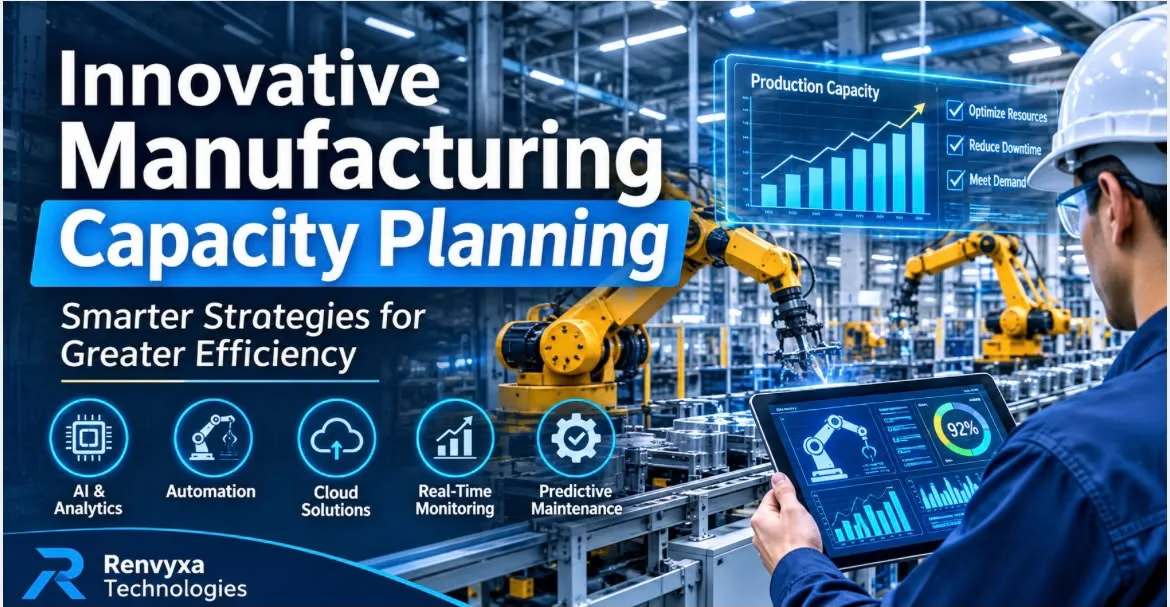
"Discover 11 innovative manufacturing capacity planning strategies using AI, automation, predictive analytics, and digital twin technology to improve production efficiency, optimise resources, and reduce operational costs."
Manufacturing businesses are constantly looking for ways to increase production efficiency, reduce operational expenses, and meet growing customer expectations. However, managing production capacity becomes challenging when companies deal with changing demand, limited resources, equipment failures, and complex supply chains.
Manufacturing capacity planning plays an important role in solving these challenges. It helps organizations determine how much they can produce within a specific period while considering available machinery, employees, materials, and production time.
Traditional planning methods often rely on spreadsheets and manual calculations. Although these methods can work for smaller operations, modern manufacturing environments require more advanced approaches to manage increasing production demands.
Technologies such as artificial intelligence (AI), predictive analytics, automation, cloud computing, and digital twins are creating new opportunities to improve manufacturing operations.
In this article, we explore innovative approaches to streamline manufacturing capacity planning, improve resource utilization, and build more efficient production systems.
1. Implement Artificial Intelligence in Manufacturing Planning
Artificial intelligence is becoming an important technology for modern manufacturing businesses. AI-powered systems can analyze large amounts of production data and help managers make more informed decisions.
Traditional capacity planning often depends on historical production records and manual estimates. AI introduces a more intelligent approach by evaluating machine availability, workforce requirements, production schedules, and customer demand.
For example, an AI-powered system can identify when a manufacturing facility is approaching its maximum production capacity. It can also recommend changes to production schedules to prevent delays and improve resource distribution.
Manufacturers can use AI to:
Forecast production requirements.
Identify capacity limitations.
Optimize manufacturing schedules.
Improve resource allocation.
Reduce operational inefficiencies.
By integrating AI into manufacturing operations, businesses can make faster decisions and respond more effectively to changing production requirements.
2. Use Predictive Analytics for Better Demand Forecasting
Demand forecasting is one of the most important elements of manufacturing capacity planning.
When manufacturers underestimate customer demand, they may experience production delays, material shortages, and missed delivery deadlines. Similarly, overestimating demand can result in excess inventory and unnecessary operational expenses.
Predictive analytics helps businesses understand future demand by analyzing historical sales, seasonal trends, market conditions, and customer purchasing patterns.
For example, a manufacturing company producing electronic products can analyze previous sales data to identify periods of increased demand. This information allows management teams to prepare additional production resources before orders increase.
Predictive analytics can also help businesses identify unexpected changes in demand and adjust their production strategies accordingly.
Combining demand forecasting with capacity planning creates a more flexible manufacturing environment where resources are allocated according to actual business requirements.
3. Adopt Cloud-Based Manufacturing Management Systems
Managing manufacturing operations across multiple departments can become complicated when businesses use separate software applications.
Cloud-based manufacturing management systems provide centralized access to important operational information. They allow production managers, inventory teams, and business administrators to access updated data from different locations.
These platforms can connect production schedules, inventory records, equipment information, and workforce management activities.
Some important advantages include:
Centralized production information.
Improved communication between departments.
Better operational visibility.
Flexible access to business data.
Easier integration with existing applications.
Cloud-based systems can also support business expansion because companies can increase their software capabilities as operational requirements grow.
Manufacturers interested in understanding this technology can explore cloud computing solutions and enterprise technologies.
4. Improve Equipment Utilization Through Predictive Maintenance
Manufacturing capacity depends heavily on equipment availability and performance. Unexpected machine failures can interrupt production schedules, reduce output, and increase maintenance expenses.
Predictive maintenance helps manufacturers identify possible equipment problems before they result in serious breakdowns.
By using industrial sensors, Internet of Things (IoT) devices, and machine performance data, businesses can monitor equipment conditions continuously.
For example, unusual vibration, temperature changes, or declining machine performance may indicate that maintenance is required.
Instead of waiting for equipment to fail, maintenance teams can schedule repairs during appropriate production periods.
Predictive maintenance helps manufacturers:
Reduce unexpected equipment downtime.
Improve machinery reliability.
Extend equipment lifespan.
Maintain consistent production output.
Reduce emergency repair costs.
This approach allows manufacturing businesses to use their available equipment more efficiently and maintain reliable production schedules.
5. Introduce Digital Twin Technology
Digital twin technology is transforming how manufacturers plan and evaluate production capacity.
A digital twin is a virtual representation of a physical machine, production process, or manufacturing facility. It uses operational data and digital models to simulate real-world conditions.
Manufacturers can use digital twins to test different production scenarios before making expensive changes to their actual facilities.
For example, a company considering a new production line can simulate its expected performance to understand whether existing resources will support the additional workload.
Digital twin technology can help businesses:
Identify production bottlenecks.
Evaluate manufacturing layouts.
Test production schedules.
Monitor equipment performance.
Improve resource utilization.
According to the National Institute of Standards and Technology (NIST), digital twins can support manufacturing through monitoring, simulation, prediction, and optimization.
Businesses can learn more through the NIST Digital Twins research resource.
6. Optimize Workforce and Resource Allocation
Manufacturing capacity is not determined by machinery alone. Employees, technical skills, working hours, and material availability also influence production performance.
Poor workforce allocation can create unnecessary delays, even when sufficient equipment is available.
Manufacturers should evaluate employee availability, skill requirements, shift schedules, and departmental workloads when preparing production plans.
Digital workforce management systems can help managers organize employee schedules and assign responsibilities according to production priorities.
For example, when demand increases in a particular department, managers can redistribute qualified employees or introduce additional shifts to maintain production targets.
Businesses should also coordinate workforce planning with material availability and equipment schedules.
A balanced resource allocation strategy helps manufacturers reduce operational pressure and improve production efficiency.
7. Implement Real-Time Production Monitoring
Traditional manufacturing systems often depend on information collected at specific intervals. This can make it difficult for managers to respond quickly when production conditions change.
Real-time production monitoring provides better visibility into manufacturing activities.
Connected machinery, industrial sensors, and digital dashboards can provide information about production speed, machine availability, output levels, and equipment performance.
For example, if a production line begins operating below its expected speed, managers can identify the issue and investigate potential causes before it affects delivery schedules.
Real-time monitoring also helps businesses compare actual production performance with planned targets.
By using accurate operational information, manufacturing companies can make faster decisions and improve coordination between departments.
8. Automate Repetitive Manufacturing Processes
Automation is another effective approach to improving manufacturing capacity.
Many production facilities still depend on repetitive manual activities that consume time and increase the possibility of human error.
Automated equipment, robotic systems, and intelligent software can help manufacturers complete repetitive tasks more efficiently.
For example, robotic systems can support assembly operations, while automated material handling equipment can transport components between production departments.
Automation can improve:
Production consistency.
Manufacturing speed.
Workplace productivity.
Resource utilization.
Operational accuracy.
However, manufacturers should identify processes where automation provides measurable benefits before investing in new technology.
Strategic automation can help businesses reduce production bottlenecks and improve the performance of existing facilities.
9. Strengthen Inventory and Supply Chain Management
Effective capacity planning requires close coordination between manufacturing operations, inventory management, and suppliers.
Even when a company has sufficient machinery and employees, production may stop because essential raw materials are unavailable.
Modern inventory management systems help businesses monitor stock levels, track material movements, and identify potential shortages.
Manufacturers can also integrate inventory information with production planning systems to ensure that materials are available when required.
For example, automated inventory alerts can notify purchasing teams when essential components reach predefined minimum levels.
Better supply chain coordination helps businesses reduce unnecessary inventory costs, prevent material shortages, and maintain consistent production schedules.
10. Use Manufacturing Analytics to Measure Performance
Manufacturing capacity planning should be continuously evaluated to ensure that production resources are being used effectively.
Businesses should monitor important performance indicators to identify operational weaknesses and measure improvements.
Some useful manufacturing KPIs include:
Overall Equipment Effectiveness (OEE): Measures equipment availability, performance, and production quality.
Capacity Utilization Rate: Shows how much of the available production capacity is being used.
Production Cycle Time: Measures the time required to complete a manufacturing process.
Production Downtime: Tracks the time when equipment or production lines are not operating.
On-Time Delivery Rate: Measures how consistently a business delivers products according to customer deadlines.
By monitoring these indicators, manufacturers can identify production bottlenecks, improve operational processes, and make better investment decisions.
11. Integrate Manufacturing Systems for Better Coordination
Manufacturing businesses often use different applications for inventory, production scheduling, finance, customer management, and supply chain operations.
When these systems operate independently, important information can become disconnected between departments.
Integrating manufacturing applications creates a more connected business environment.
For example, connecting an Enterprise Resource Planning (ERP) system with Manufacturing Execution Systems (MES) can help businesses coordinate production activities with inventory and business requirements.
Integrated systems can improve information sharing, reduce manual data entry, and provide managers with a more complete view of manufacturing performance.
Manufacturers can also explore manufacturing intelligence and production data management to understand how connected operational information supports better decision-making.
The Future of Manufacturing Capacity Planning
The future of manufacturing capacity planning will increasingly depend on intelligent technologies and connected production environments.
Artificial intelligence, machine learning, industrial IoT, cloud computing, and digital twin technology will continue to create opportunities for manufacturers to improve production visibility and resource management.
Businesses will be able to evaluate production scenarios, identify operational risks, and make more informed decisions using real-time information.
However, adopting new technologies requires proper planning. Manufacturers need systems that integrate with their existing infrastructure and address their specific operational requirements.
Companies that invest in digital transformation can build more flexible manufacturing operations and prepare for changing customer expectations.
Conclusion
Streamlining manufacturing capacity planning requires more than increasing production resources. Businesses need intelligent strategies that improve forecasting, equipment utilization, workforce management, and operational coordination.
AI-powered planning, predictive analytics, cloud-based systems, digital twins, automation, and real-time monitoring can help manufacturers reduce inefficiencies and improve production performance.
By adopting these innovative approaches, manufacturing companies can make better use of available resources, minimize production delays, and build scalable operations.
The right combination of technology and strategic planning can help businesses improve manufacturing efficiency while maintaining long-term competitiveness.
How Renvyxa Technologies Supports Digital Transformation
At Renvyxa Technologies, we recognize the importance of intelligent technology in modern business operations.
We provide enterprise AI, custom software development, CRM development, and business automation solutions designed to help organizations improve workflows and support digital transformation.
From intelligent business applications to customized software solutions, our focus is on helping companies adopt technology that supports operational efficiency and sustainable growth.
Explore our AI and software development services to discover how modern technology can support your business goals.
Visit Renvyxa Technologies to learn more.
 Machine Learning
 for Businesses: Trends in 2027
Discover how machine learning is transforming modern businesses in 2027 through...
 AI & Innovation
Top Open Source AI Tools You Should Try in 2026
Discover the top open source AI tools of 2026. Explore powerful, privacy-focused...
 ARTIFICIAL INTELLIGENCE
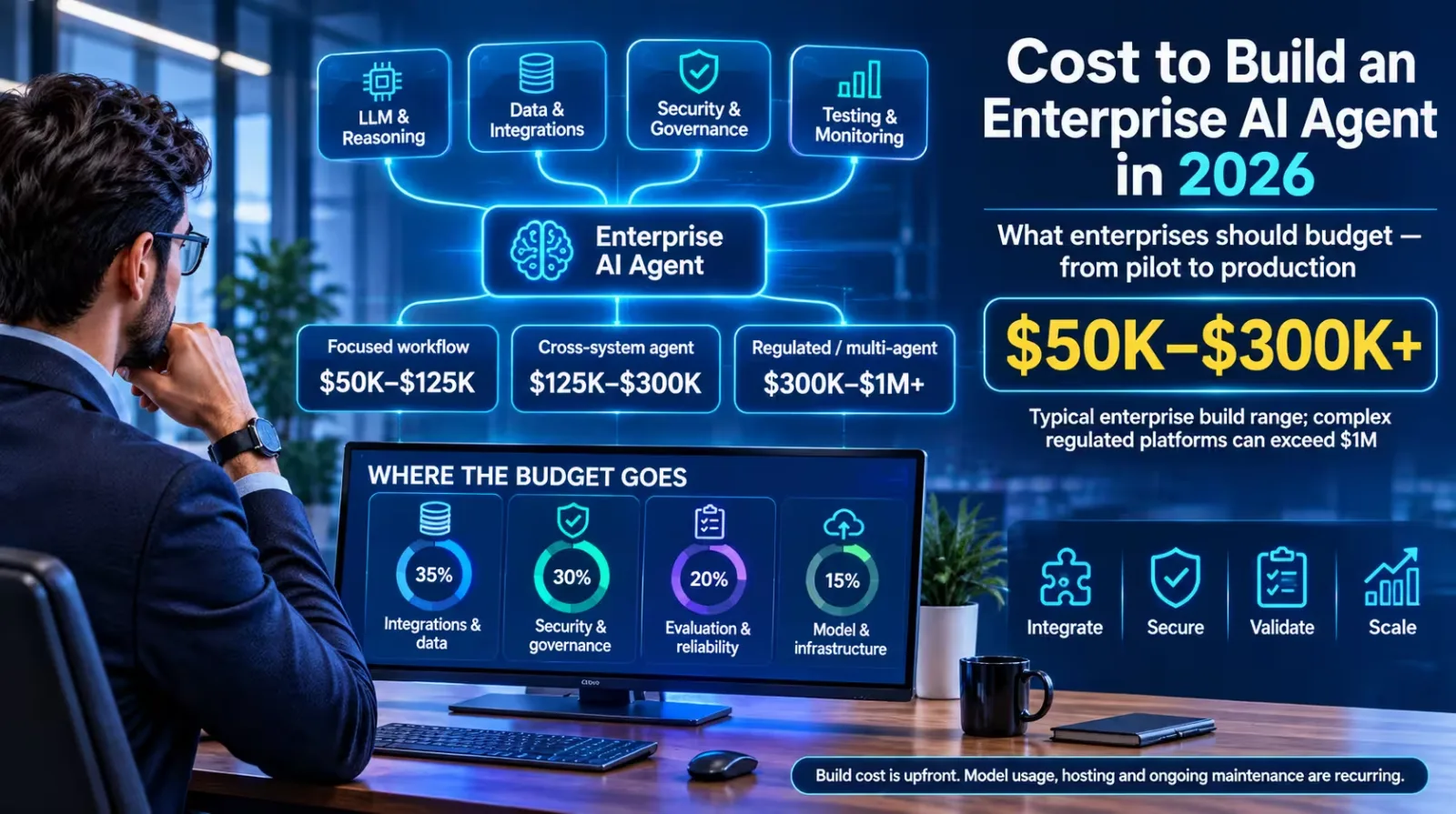
Cost to Build an Enterprise AI Agent in 2026: Pricing Breakd...
What is the real cost to build an enterprise AI agent in 2026? From MVP proof-of...
 CYBERSECURITY
Cloud Data Protection Strategies for Modern Enterprises in 2...
Learn key cloud data protection strategies to secure enterprise infrastructure,...
 Technology / Digital Marketing
The Ultimate Guide to AI Marketing Tools: How to Scale Your...
Explore the ultimate guide to top AI marketing tools, learn how to scale your te...
 DIGITAL MARKETING
AI Copy-writing Tools for Digital Marketing: How to Scale Co...
Learn how AI copy-writing tools for digital marketing help businesses scale cont...
 DIGITAL MARKETING
Why Guest Posting Is Important for SEO in 2026
Learn why guest posting is important for SEO in 2026. Build high DA back-links a...