
Cost to Build an Enterprise AI Agent in 2026: Pricing Breakdown

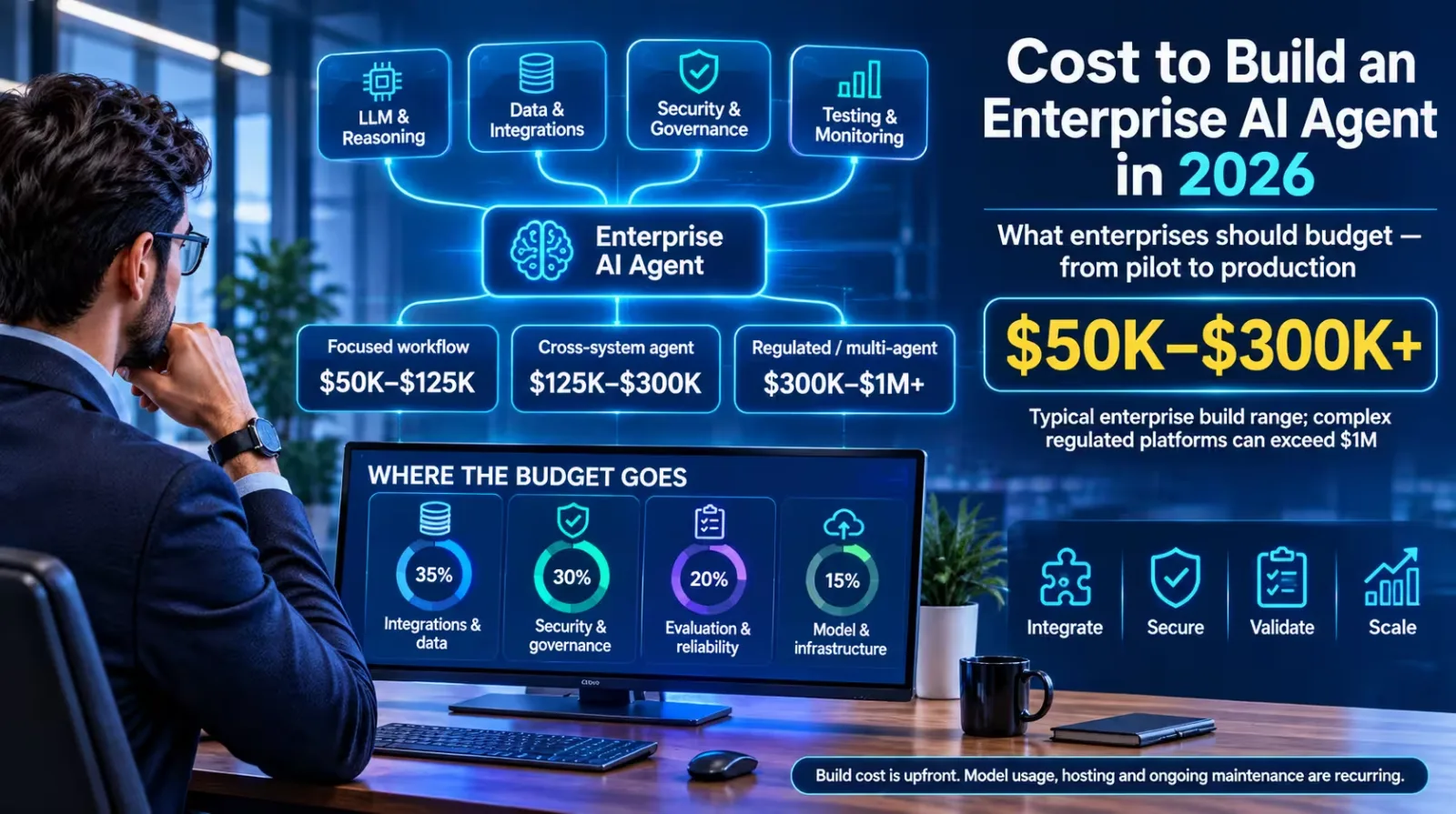
"What is the real cost to build an enterprise AI agent in 2026? From MVP proof-of-concepts at $15,000 to autonomous multi-agent systems scaling beyond $250,000, here is an executive pricing blueprint covering LLM token economics, RAG pipelines, latency benchmarks, and enterprise security."
Understanding the real cost to build an enterprise ai agent in 2026 has become a board-level priority for forward-thinking CTOs and enterprise architects. As organizations transition from basic conversational wrappers to goal-driven autonomous systems capable of executing multi-step workflows across SAP, Salesforce, and custom microservices, budgetary models have evolved dramatically.
Executive Summary: 2026 Benchmark Averages
Building an enterprise AI agent today typically requires an initial capital outlay between $18,000 and $250,000+ depending on system autonomy, integration complexity, and governance requirements. Ongoing inference and infrastructure maintenance average $1,200 to $9,500/month.
Enterprise AI Agent Investment Tiers: From Proof-of-Concept to Production Scale
Enterprise AI systems are not monolithic products; their financial scope reflects their autonomy level, tool access, and deterministic compliance requirements. In 2026, enterprise implementations fall into three clear investment brackets:
Core Cost Drivers: What Truly Dictates the Cost to Build an Enterprise AI Agent
When engineering leaders calculate comprehensive capital allocation, they must dissect where development hours and cloud budgets are genuinely allocated. The underlying foundation model is rarely the largest expenditure.
1. Data Engineering and Vector Architecture (30% – 35% of Total Budget)
An autonomous agent is only as competent as the contextual intelligence feeding its reasoning loop. Unstructured PDFs, internal Confluence docs, API schemas, and historical customer interactions must undergo semantic chunking, re-ranking, and dynamic metadata tagging.
- Hybrid RAG Pipelines: Combining dense vector search with BM25 sparse lexical search to eliminate hallucination in domain-specific queries.
- Graph RAG: Constructing enterprise knowledge graphs to map entity relationships, critical for financial auditing and supply chain diagnostics.
- Data Sanitization: Automated scrubbing of PII (Personally Identifiable Information) before context injection into inference contexts.
2. Agentic Orchestration and Tool Execution (25% – 30% of Total Budget)
Modern autonomous agents do not just produce textual answers—they execute shell commands, query relational databases, trigger webhook payments, and reconcile accounts. Building deterministic state machines with frameworks like LangGraph, CrewAI, or AutoGen requires senior software engineering to prevent catastrophic recursion and hallucination loops.
Unconstrained autonomous loops can exhaust API budgets in minutes. Production architectures require strict circuit breakers, timeout thresholds, and automated human-in-the-loop escalation rules.
3. Security Guardrails, Red Teaming & Compliance (15% – 20% of Total Budget)
Deploying AI agents inside enterprise perimeters exposes businesses to novel attack vectors, including prompt injection, model extraction, and unauthorized privilege escalation. Enterprise deployments mandate dedicated AI firewalls (such as NeMo Guardrails or Llama Guard), input sanitizers, and comprehensive red-teaming simulations before production authorization.
Hidden Running Costs: Inference Tokens, Vector Databases & Maintenance in 2026
A frequent pitfall in AI budgeting is overlooking post-deployment operational expenditure (OpEx). Running autonomous multi-agent workloads involves constant compute and memory synchronization:
- Model Token Economics: Multi-step reasoning loops generate 5x to 15x more tokens than a standard chatbot conversation due to system prompt recursion, observation traces, and tool schemas.
- Managed Vector Stores: Enterprise clusters on Pinecone, Qdrant, or AWS pgvector average $200 to $1,800 monthly depending on vector dimensions and index replication.
- Agent Observability: Real-time tracing platforms like Langfuse, Arize Phoenix, or Datadog LLM monitoring cost between $350 and $1,500/month for high-throughput enterprise pipelines.
- Model Drift & Prompt Tuning: Retaining an expert engineering partner for regression testing and prompt updates typically requires $2,500 to $7,000 in monthly retainer support.
Top-performing organizations utilize intelligent LLM routing gateways. Lightweight intent-classification tasks run on ultra-fast sub-second models (like Gemini 2.5 Flash Lite or Claude Haiku), reserving heavy frontier models only for complex synthesis tasks.
In-House Engineering vs. Specialized AI Consultancy: Build vs. Buy
Deciding whether to assemble an internal AI division or engage a specialized partner like Renvyxa Custom AI Engineering dictates both your capital expenditure and speed to market:
ROI & Payback Period: When Does an Enterprise AI Agent Pay for Itself?
While the upfront investment represents a substantial financial commitment, enterprise case studies show accelerated payback cycles. When deployed in customer onboarding, claims processing, code refactoring, or enterprise logistics, autonomous agents routinely deliver:
- 70% to 85% Reduction in Cycle Time: Resolving multi-system back-office transactions in seconds instead of business days.
- Deflection of Tier-2 Support Escalations: Handling complex authenticated tasks that previously required human subject matter experts.
- Average Breakeven Within 4 to 8 Months: Making autonomous agentic architecture one of the highest-yield technological investments of 2026.
To explore how Renvyxa architects secure, high-throughput autonomous agents tailored to your enterprise data ecosystem, explore our Enterprise AI Solutions or schedule an architectural discovery session with our engineering directors today.
 AI & Innovation
Top Open Source AI Tools You Should Try in 2026
Discover the top open source AI tools of 2026. Explore powerful, privacy-focused...
 ARTIFICIAL INTELLIGENCE
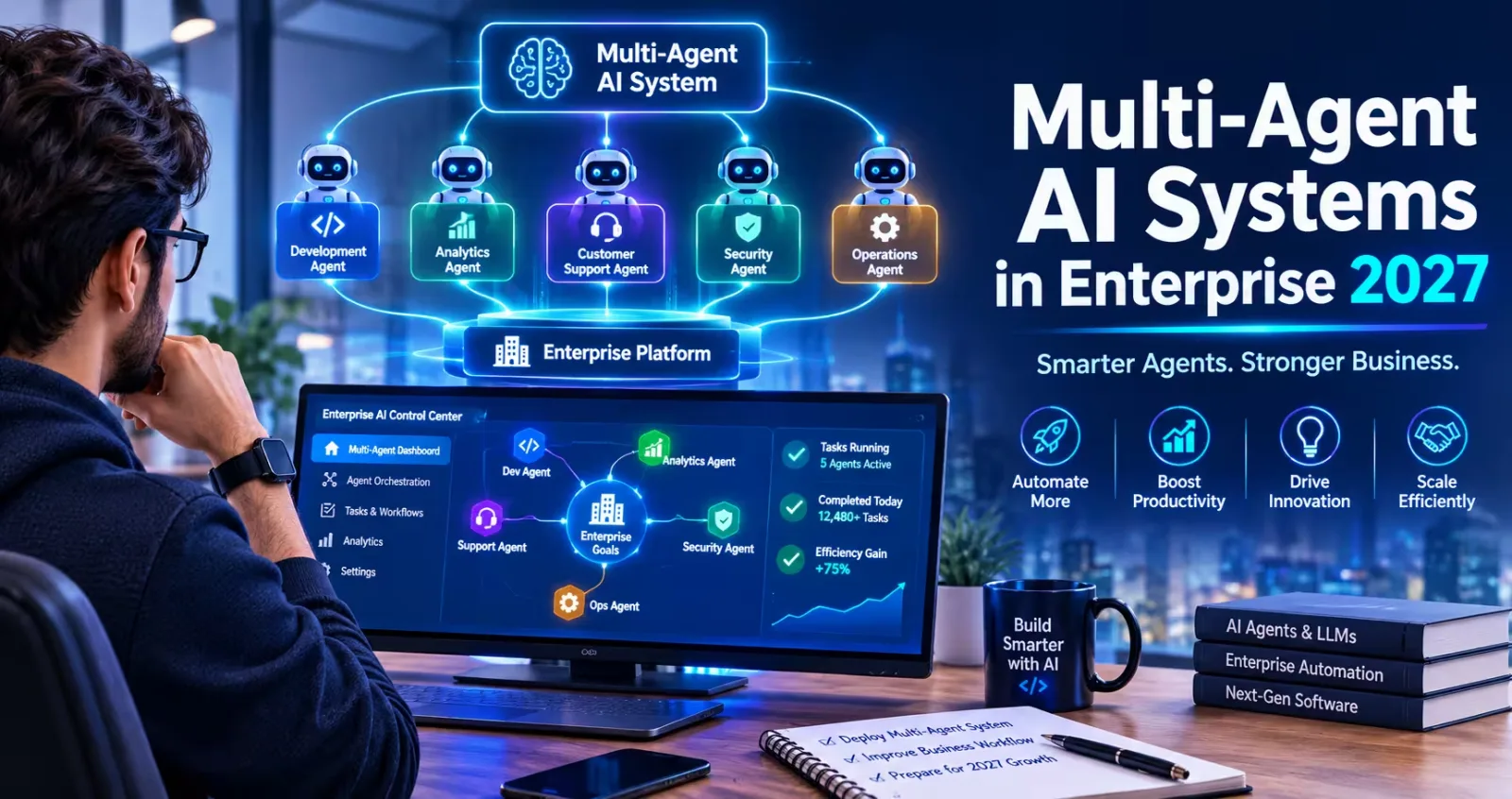
Multi-Agent AI Systems in Enterprise 2027
Discover why multi-agent AI systems in enterprise 2027 are replacing monolithic...
 ARTIFICIAL INTELLIGENCE
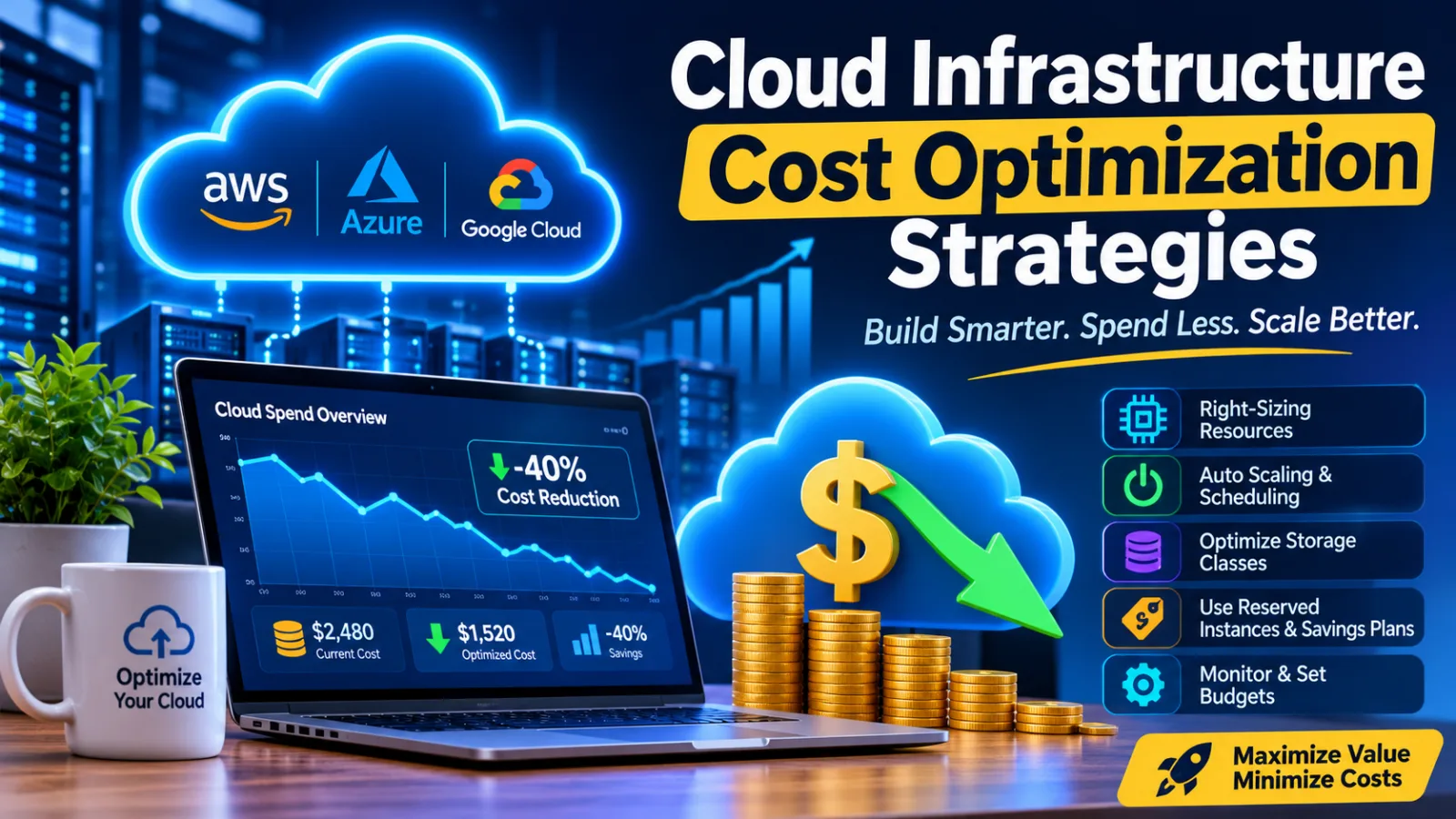
Cloud Infrastructure Cost Optimization Strategies
Discover actionable cloud infrastructure cost optimization strategies to slash A...
 ARTIFICIAL INTELLIGENCE
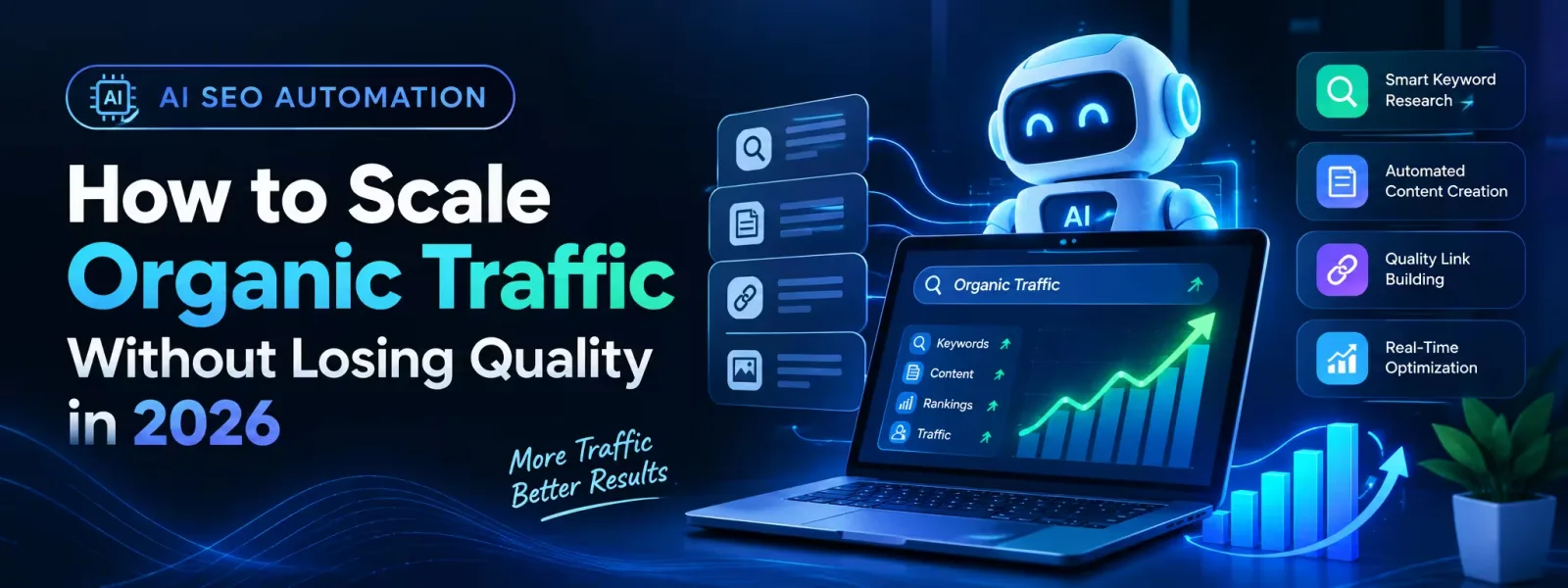
AI SEO Automation: How to Scale Organic Traffic Without Losi...
Discover how enterprise engineering teams can scale organic search traffic using...
 CYBERSECURITY
Cloud Data Protection Strategies for Modern Enterprises in 2...
Learn key cloud data protection strategies to secure enterprise infrastructure,...
 Technology / Digital Marketing
The Ultimate Guide to AI Marketing Tools: How to Scale Your...
Explore the ultimate guide to top AI marketing tools, learn how to scale your te...
 DIGITAL MARKETING
AI Copy-writing Tools for Digital Marketing: How to Scale Co...
Learn how AI copy-writing tools for digital marketing help businesses scale cont...
 DIGITAL MARKETING
Why Guest Posting Is Important for SEO in 2026
Learn why guest posting is important for SEO in 2026. Build high DA back-links a...