
Cloud Data Protection Strategies for Modern Enterprises in 2026
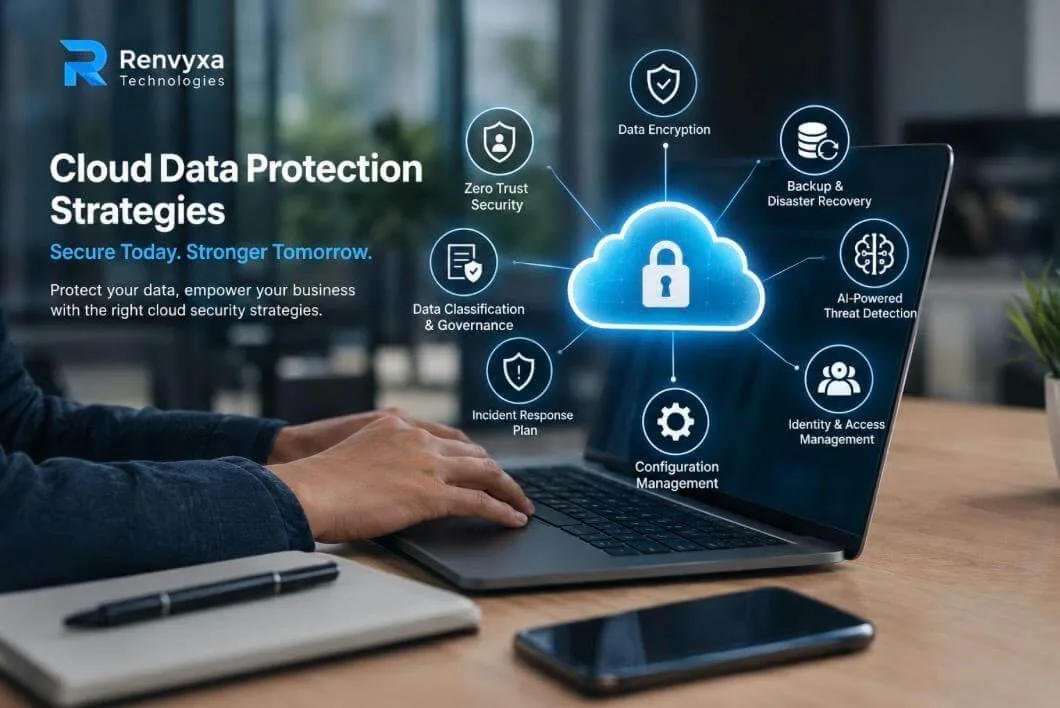
"Learn key cloud data protection strategies to secure enterprise infrastructure, prevent security breaches, and safeguard sensitive digital assets in 2026."
Implementing strong cloud data protection is essential for modern enterprise platforms. As companies are embracing the opportunities afforded by the cloud, the need to protect information residing there becomes an enterprise priority. Businesses use the cloud to store customer data, run applications, facilitate collaboration, and host other vital operations. Yet, there are potential pitfalls to using cloud computing, including breaches, data theft, ransomware, and accidental destruction of info
Modern enterprises need to think beyond traditional data protection methods. Going forward, businesses need to invest in reliable, repeatable, and scalable solutions that will be able to defend the organization’s data in the cloud.
There are many approaches to achieve effective enterprise security in the cloud. Below are 10 of the most common ways to protect information in the cloud that businesses may consider using in 2026.
Why Cloud Data Protection Matters in 2026
Cloud computing is a powerful technology that enables businesses to operate in entirely new ways. As companies continue to move their operations to the cloud, the benefits it delivers become harder to ignore. At the same time, however, organizations need to carefully consider the risks and challenges of storing information in the cloud.
Malicious outsiders can intercept and steal data stored in the cloud, which can hurt the business in various ways. In addition, the nature of the cloud makes it challenging for enterprises to define and enforce acceptable use policies. The cloud security situation becomes even more complicated if the organization uses multiple cloud service providers.
Finally, enterprises must understand that cloud security is a shared responsibility that involves their cloud provider and the business itself. The cloud provider will be responsible for some aspects of cloud security, while the enterprise is accountable for others. A comprehensive strategy to protect data in the cloud helps enterprises deal with the complexity and uncertainty of the cloud environment. It enables organizations to reduce the risk of breaches and other security incidents, which supports business continuity and helps the enterprise meet its objectives.
10 Ways To Successfully Protect Information in the Cloud for Enterprises in 2026
1. Implement Appropriate Data Encryption.
Data encryption is a key component of any enterprise data protection strategy. It involves encoding information so that only authorized parties can read it. There are three main types of data, based on its location: data at rest, data in motion, and data in use. For the first two types, encryption is relatively straightforward. Many database platforms offer native encryption features that enterprises can use to hide the contents of their data from unauthorized individuals.
For data in use, enterprises need to consider confidential computing as an option. It enables organizations to process information in encrypted form, thus preventing unauthorized interception.
As the enterprise considers data encryption options, it should understand that encryption is only one component of a broader enterprise security strategy. The encryption keys need to be adequately managed and protected, which requires careful analysis of the enterprise’s threat landscape and risk exposure profile. Key management solutions provide the infrastructure needed to store and safeguard encryption keys.
An enterprise’s encryption and key management infrastructure should be integrated with the organization’s overall security strategy. While it is not always necessary for every enterprise to implement full-disk encryption or encryption of all data at rest, organizations that handle financial information, healthcare-related data, and other high-value information need to consider such options.
2. Best Practices for Cloud Data Protection
In traditional network security models, the default is to allow access between systems and hosts that are on the same network. Zero Trust reverses the model, assuming that no user or system, internal or external, can be trusted implicitly. Instead, every user, application, and system should be authenticated and authorized before being granted access to resources. Enterprises can benefit from adopting the Zero Trust approach to network security, which is especially important in a distributed environment such as the cloud.
Organizations should implement Zero Trust principles to secure the network and the cloud. Enterprises should take advantage of the many Zero Trust network security features, including multifactor authentication, least privilege access, regular Privileged Access Management reviews, and system integrity checks. The Zero Trust approach limits the attack surface that a malicious actor can target, thereby reducing the likelihood of a security breach.
For example, an employee, such as a marketing director, will need access to her specific applications and systems. With Zero Trust, the marketing director does not automatically have access to the finance director’s applications. By implementing Zero Trust, enterprises gain better control over their network traffic and help reduce the risk of lateral movement in the cloud environment.
3. Ensure Data Availability with Cloud Backup and Recovery Services
While enterprises need to protect their data from being accessed or used by unauthorized parties, they must also ensure that the data is not deleted, misplaced, or rendered unusable due to a technological malfunction. Backups are key to ensuring data availability in the cloud. However, backups are only as good as the procedures that allow the enterprise to access and use them.
Organizations must implement an enterprise-level cloud data backup and recovery procedure that defines the rules for creating and storing backup copies. Enterprises considering cloud backup and recovery solutions should invest in automated, reliable solutions that create multiple copies of the enterprise’s data and store them in different locations. Enterprises must ensure that only authorized users can access their data and that their cloud backup solution allows for rapid data recovery in the case of an outage.
Organizations must define recovery options that fit their operations. The enterprise should consider Recovery Time Objectives (RTOs) and Recovery Point Objectives (RPOs). RTO refers to the amount of time it takes for an enterprise to restore its operations after a disaster, while RPO refers to the amount of data that can be lost before the enterprise reaches its RTO threshold.
For example, an enterprise that sells products online will likely have different RTO and RPO requirements than enterprises that store data for analytical purposes. The online retailer probably wants to keep its RPO and RTO as low as possible, given the high value of its data and the likelihood of losing revenue if its data is not available for a prolonged period.
Finally, enterprises should ensure that their cloud backup solution includes appropriate access controls to prevent data from being deleted or modified. Many cybercriminals will attempt to gain access to the enterprise’s production systems and data backups at the same time, giving them much more power to cause damage to the enterprise. By ensuring that appropriate restrictions are in place to prevent such attacks, enterprises greatly reduce the risk of data loss and downtime.
4. Leverage AI for Enhanced Cloud Security Posture
Artificial Intelligence (AI) is an emerging technology that can be leveraged to help enterprises achieve their cloud security goals.
Modern AI-powered cloud security tools can ingest and analyze vast amounts of data to help enterprises reduce the time it takes to detect and respond to threats. When properly configured, such tools can help organizations identify and prioritize security events, improving the enterprise’s overall security posture.
For example, businesses can use AI-powered cloud security tools to detect anomalous activity, such as unusual login attempts or data access patterns. If an enterprise notices that one of its users is accessing significantly more data than usual, it might want to investigate whether the user is trying to exfiltrate data or has had their credentials compromised.
Most enterprise-level AI-powered cloud security tools can detect such threats and reduce the workload for human security analysts. Some tools even include features that allow enterprises to investigate and remediate threats directly within the tool. However, enterprises must ensure that their AI-powered tools are appropriately configured and do not generate false positives that can impede the enterprise’s operations.
"Alongside implementing advanced cloud systems, utilizing proper digital security tools ensures complete infrastructure safety."
5. Implement Comprehensive Identity and Access Management Systems
The security of an enterprise’s cloud environment and data is only as strong as its ability to restrict and monitor access to it. Enterprises should implement a comprehensive identity and access management (IAM) strategy to ensure that only authorized users and systems can access the company’s data and applications. An IAM strategy typically revolves around five pillars: multifactor authentication, role-based access control, Just-in-Time privileged access, Privileged Access Management reviews, and application-specific authorization controls.
Enterprises must also ensure that their IAM strategy covers all users, including applications, services, and other systems that have access to the enterprise’s data. Enterprises should use multifactor authentication tools to secure all of their IAM strategy components.
An IAM strategy is crucial for enterprises that operate in a distributed environment, such as the cloud. Enterprises must ensure that their IAM strategy covers all of their applications, data, users, and systems, including those used by third parties. Enterprises should also ensure that they follow IAM best practices, such as using the least privilege approach, restricting access to data on a need-to-have basis, storing and transmitting credentials securely, and revoking access when it is no longer needed.
Applications and other systems typically use application-specific credentials to access an enterprise’s data and systems. Enterprises should restrict such access using IAM tools and strategies. Finally, Enterprises should conduct regular IAM reviews to identify and remediate any weaknesses or vulnerabilities in their IAM strategy.
6. Ensure Cloud Infrastructure Security Through Effective Configuration
The cloud provides enterprises with a diverse array of configuration options for their data storage and processing needs. While such flexibility is beneficial, it also creates opportunities for misconfiguration that can expose the enterprise to serious security risks.
An enterprise’s cloud infrastructure should be configured in a way that minimizes the risk of a cyberattack. For example, an enterprise’s public storage containers should not be publicly accessible. An enterprise’s databases should be appropriately secured to prevent data loss or theft. Enterprises must also secure their cloud administrative panels to ensure that only authorized users can change or delete data.
Tools such as Cloud Security Posture Management (CSPM) solutions can help enterprises ensure that their cloud infrastructure is configured correctly and does not expose the enterprise to avoidable risks.
Enterprises should define security standards and use CSPM solutions to scan their cloud infrastructure to ensure compliance. The enterprise should also ensure that publicly accessible storage, databases, and other components are not available to unauthorized parties. Tools such as CSPM solutions will alert the enterprise to any configuration changes that might make the infrastructure less secure.
Automated infrastructure as code solutions can also help enterprises ensure that their cloud infrastructure remains secure. Such tools typically integrate with CSPM solutions to help enterprises maintain an appropriate security posture for their cloud infrastructure.
7. Take Advantage of the Cloud’s Data Classification and Governance Features
Not all of the enterprise’s data is equal in terms of its sensitivity or value to the organization. As a result, enterprises need to store data in a way that reflects its sensitivity and ensures that it is protected appropriately. Data classification and governance tools and techniques can be used to ensure that each piece of data is appropriately secured. A typical classification system will include public data, internal data, confidential data, and highly confidential data.
Public data includes information that can be freely shared with anyone, such as the enterprise’s website or its publicly available social media accounts.
Internal data is information that should not be made public but does not require any special protections, such as internal memos and procedures. Confidential data is information that should be shared only with authorized personnel, and highly confidential data is information that requires strict protection measures.
Enterprises must ensure that they have appropriate rules and procedures in place to protect data at each level of classification. The enterprise should also understand how each type of information it collects falls into this system, what rules apply to each type of data, and how it stores and secures such data. Such information includes how the enterprise collects data, stores it, and shares it with other parties and how it retains or destroys such data at the end of its life cycle.
Enterprises can use data loss prevention (DLP) tools to ensure that the company’s sensitive data is not shared or accessed without authorization. Enterprises should use appropriate data governance techniques to ensure that they collect only the data that they need. The enterprise should only retain data for as long as it is needed to achieve its business objectives.
8. Develop an Enterprise-Level Cloud Incident Response Plan
Even the most secure enterprise can still be the target of a cyberattack that compromises its data. An enterprise’s data protection strategy in the cloud must include a comprehensive cloud incident response plan that ensures that the enterprise knows how to respond in the case of a data breach or other security incident.
Without an incident response plan, an enterprise’s response to a security incident can be chaotic, causing it to fail to take the appropriate steps to mitigate the damage and resume operations in the shortest possible timeframe. Developing a comprehensive incident response plan requires the enterprise to carefully outline response procedures for different types of incidents.
Organizations typically adopt a five-step incident response plan that includes the following:
• Preparation: During this phase, the enterprise must decide who will be responsible for responding to an incident response and gather all relevant information and documentation.
• Detection and analysis: During this phase, the enterprise detects an incident and analyzes it to determine the appropriate response.
• Containment: In this phase of the response plan, the enterprise must take measures to contain the damage that the incident has caused.
• Eradication and recovery: In this phase, the enterprise must ensure that the cause of the incident has been eradicated and that its systems and infrastructure are secure and ready to resume normal operations.
• Post-incident activity: Finally, the enterprise will conduct a post-incident analysis to determine what caused the incident.
Enterprises must conduct regular tabletop and technical recovery drills to ensure that the response plan works correctly and that all personnel know their responsibilities.
An organization should also determine the incident response procedures for its cloud provider and ensure that it has appropriate agreements with its cloud provider and any other relevant third parties. Finally, enterprises should ensure that they understand their legal and regulatory obligations regarding data security in the cloud.
9. Understand the Shared Responsibility Model for Cloud Security
The security of an enterprise’s data in the cloud depends on both the enterprise and its cloud provider. Each party plays a distinct role in ensuring that the data is appropriately secured. The shared responsibility model for cloud security refers to the set of responsibilities that each party has for cloud security. This model can vary significantly depending on the specific cloud provider and the type of cloud service that the enterprise adopts. Typically, the cloud provider is responsible for the physical security of the data center where the enterprise’s data is stored.
Enterprises are responsible for ensuring that their data is secured at the application level, including the software and infrastructure that the enterprise uses to store and process the data. This distinction is especially important with Infrastructure-as-a Service (IaaS) configurations cloud data protection
In a Software-as-a-Service (SaaS) environment, the cloud provider is responsible for most infrastructure-related security tasks, while the enterprise is responsible for application-level security.
Such measures include implementing appropriate access controls, ensuring that the enterprise’s applications are configured correctly, reviewing all available documentation and audit trails, understanding how the cloud provider handles third-party applications, and ensuring that the cloud provider’s data retention and deletion policies are appropriate.
Finally, enterprises must understand their regulatory and contractual obligations concerning cloud data security and ensure that their data is appropriately secured.
10. Develop a Security-First Cloud Strategy That Enables Long-Term Growth
Enterprises must recognize that the security strategy for the cloud is not a one-time endeavor. As the enterprise grows and adopts new technologies, its security strategy must evolve to address the enterprise’s unique requirements. A security-first strategy enables the enterprise to make decisions that support its long-term goals by carefully considering the enterprise’s risk exposure, regulatory requirements, and business goals.
The enterprise should consider its current infrastructure and the data that it stores in the cloud and identify which data is the most sensitive. The enterprise must also assess its current cloud data protection security posture and ensure that it understands the threats that it faces. The enterprise should then determine which security measures it can implement based on its objectives and risk exposure profile.
For example, a small enterprise might start by ensuring that its staff uses multi-factor authentication and that the enterprise does not grant excessive permissions to its staff. It can also implement measures to ensure that its backups are not compromised and that its storage infrastructure is not misconfigured.
Key Cloud Data Protection Trends Enterprises Should Watch in 2026
As enterprises use the cloud, they need to be aware of the trends and technologies that will shape the environment in the years to come. Based on expert insights, the following are the key trends that enterprises should watch for in 2026.
AI-Assisted Security Tools Will Continue to Evolve
AI-assisted tools are becoming increasingly valuable as enterprises seek to reduce the time it takes to detect and respond to cyber threats. Enterprises should carefully consider how such tools can be used in their environment and ensure that they are appropriately configured to address the enterprise’s unique needs.
Many AI-assisted tools and technologies will likely continue to be developed, providing cloud data protection enterprises with more options as they seek to improve their security posture. Enterprises need to invest in AI-assisted tools that have been designed with appropriate privacy and security considerations in mind.
Multi-Cloud Management Will Become More Important
As enterprises adopt a multi-cloud strategy to host their applications and data, they need to ensure that they have the infrastructure and procedures in place to help secure their data. Enterprises should consider how they can centralize and standardize their security procedures across all clouds to reduce the complexity of their operations.
Privacy Enhancing Technologies Will Be Critical for Certain Workloads
Emerging privacy-enhancing technologies can help enterprises protect their sensitive data in the cloud. These technologies include confidential computing and various forms of privacy-preserving analytics.
However, enterprises need to understand that such technologies are most appropriate for specific workloads and threats. Enterprises should consider how such technologies can enhance their security posture cloud data protection
Automated Compliance Tools Will Become Increasingly Common
Automated compliance tools can help enterprises ensure that their cloud infrastructure is appropriately configured and that they are following all relevant regulations. However, such tools are not a substitute for enterprise-level understanding of compliance requirements. Enterprises must ensure that they understand the regulations that apply to them and have the processes in place to ensure that they remain in compliance.
Enterprises Will Focus More on Resilience Against Business Interruptions
As enterprises realize the importance of maintaining continuous operations, they will continue to invest more in solutions to protect themselves against ransomware and other cybersecurity threats that can cause business interruptions.
While some of the technologies that enterprises use for cloud data protection will change over time, the fundamental principles will remain the same. Enterprises must ensure that they protect their sensitive data and only allow authorized users to access it. Enterprises should also invest in cloud data protection tools that enable continuous monitoring of their cloud environment to ensure that there are no unauthorized changes. Finally, enterprises should develop procedures to ensure that they can recover their data in the case of a cyberattack or other security incident.
How Renvyxa Technologies Can Support Your Digital Transformation
Modern enterprises need to carefully consider the technology solutions that they adopt as they seek to achieve their business goals. Renvyxa Technologies helps enterprises by providing the technology solutions that are needed to strengthen their digital presence and achieve their objectives. From consulting to software-related solutions, Renvyxa Technologies can help enterprises in their endeavors.
When considering your technology-related needs, keep in mind that you need a technology partner that understands your business needs and can help you achieve your objectives. By partnering with the right technology enabler, you will be able to take your business to new heights.
Conclusion
Cloud computing is an important technology that is transforming the way that enterprises operate. However, such transformation comes at a price, as enterprises must ensure that they have the tools and procedures in place to protect their data in the cloud. A comprehensive strategy for enterprise security in the cloud includes the use of encryption, Zero Trust Network Security, and Identity Access Management tools.
In 2026, enterprises should ensure that they understand the shared responsibility model for cloud security and have an appropriate incident response plan for data-related security incidents. By taking the appropriate measures, enterprises will be able to reduce their exposure to avoidable risks and protect their sensitive data.
Explore Technology and Digital Solutions for Your Business at Renvyxa Technologies
 Technology / Digital Marketing
The Ultimate Guide to AI Marketing Tools: How to Scale Your...
Explore the ultimate guide to top AI marketing tools, learn how to scale your te...
 DIGITAL MARKETING
AI Copy-writing Tools for Digital Marketing: How to Scale Co...
Learn how AI copy-writing tools for digital marketing help businesses scale cont...
 DIGITAL MARKETING
Why Guest Posting Is Important for SEO in 2026
Learn why guest posting is important for SEO in 2026. Build high DA back-links a...
 Technology / Digital Marketing
The Ultimate Guide to AI Marketing Tools: How to Scale Your...
Explore the ultimate guide to top AI marketing tools, learn how to scale your te...