
How Healthcare Workflow Automation Is Transforming Clinics in 2027

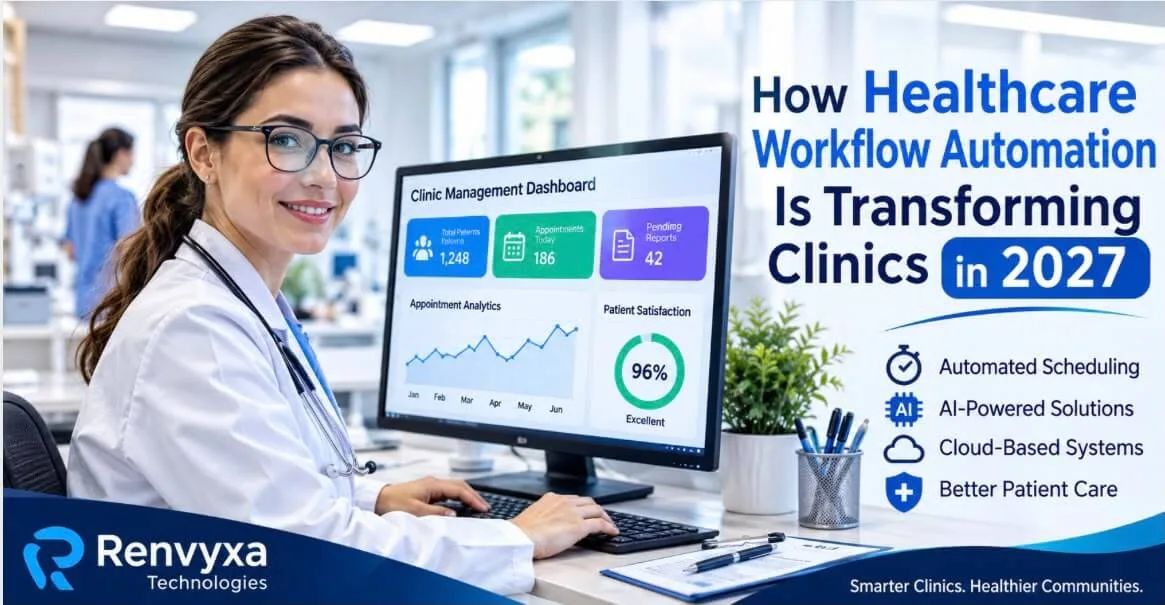
"Discover how healthcare workflow automation reduces clinician burnout, speeds up digital patient intake, and eliminates medical billing errors in modern clinics in 2027."
Introduction
Healthcare technology is evolving rapidly, and clinics are increasingly adopting digital solutions to improve their daily operations. In 2027, healthcare workflow automation is becoming an important part of modern medical management. From appointment scheduling and patient registration to billing, electronic health records, and follow-up communication, automation is helping clinics manage administrative responsibilities more efficiently.
Traditional healthcare operations often depend on paperwork, phone calls, spreadsheets, and repetitive manual tasks. These processes consume valuable time, increase the possibility of human errors, and create unnecessary pressure on healthcare professionals. As patient expectations continue to grow, clinics need modern systems that simplify operations while maintaining quality patient care.
Healthcare workflow automation combines artificial intelligence (AI), cloud computing, digital health platforms, and custom software development to connect different administrative activities. These technologies help clinics reduce repetitive work, organize information, and improve communication between departments.
1. Automated Appointment Scheduling and Patient Management
Appointment scheduling is one of the most time-consuming responsibilities in healthcare clinics. Receptionists regularly handle phone calls, appointment requests, cancellations, and rescheduling. Managing these activities manually can create scheduling conflicts and unnecessary delays.
Healthcare workflow automation simplifies appointment management through online booking platforms and intelligent scheduling software.
Patients can use clinic websites or mobile applications to check available appointment slots, book consultations, reschedule appointments, and receive automatic reminders.
Automated systems can also help clinics manage doctor availability and consultation schedules. When a patient cancels an appointment, the system can make that time slot available to another patient.
This approach helps reduce scheduling problems and allows administrative employees to focus on other important responsibilities.
2. Artificial Intelligence Is Reducing Administrative Work
Artificial intelligence is becoming an important technology in healthcare workflow automation. Clinics generate large amounts of information through consultations, medical records, billing activities, and patient communication.
Managing all this information manually can increase administrative pressure.
AI-powered tools can assist healthcare organizations with:
Organizing patient information.
Preparing consultation summaries.
Drafting administrative documentation.
Categorizing patient messages.
Managing routine communication.
Identifying incomplete records.
For example, AI documentation tools can help convert consultation conversations into draft clinical notes. Healthcare professionals can review and approve these notes before adding them to official patient records.
AI can also support administrative teams by helping organize routine requests and reducing repetitive data entry.
However, AI should support healthcare professionals rather than replace their medical knowledge and judgment. Human review remains essential when handling clinical information.
3. Electronic Health Records Improve Information Management
Electronic Health Records (EHRs) are transforming how clinics store and manage patient information. Instead of maintaining large collections of physical documents, healthcare organizations can use digital platforms to organize medical histories, prescriptions, laboratory reports, and consultation records.
Traditional record management can make information difficult to locate. Documents may become misplaced, records can be duplicated, and sharing information between departments may require additional time.
Automated EHR systems help clinics maintain organized digital records and provide authorized employees with easier access to relevant information.
Important features include:
Digital patient registration.
Medical history management.
Prescription records.
Laboratory report storage.
Consultation documentation.
Patient information updates.
When properly integrated, EHR platforms can improve coordination between different healthcare departments.
Clinics should also consider interoperability when selecting healthcare software. Systems that exchange information effectively can reduce duplicate data entry and improve information management.
4. Automated Billing and Healthcare Revenue Management
Billing is another important area where automation can improve clinic operations.
Manual billing processes often involve creating invoices, checking payment information, tracking outstanding balances, and maintaining financial records. These responsibilities can become difficult when clinics manage a large number of patients.
Healthcare billing automation helps simplify these activities through connected digital systems.
Automated billing software can generate invoices, maintain payment records, organize financial information, and prepare reports.
Revenue Cycle Management (RCM) is also becoming increasingly important. It involves managing the financial processes associated with patient accounts, insurance claims, payments, and reimbursements.
AI-assisted systems can help identify missing information and organize claims-related documentation. This allows administrative employees to identify issues that require attention.
By reducing repetitive financial tasks, clinics can improve their administrative efficiency and maintain better financial visibility.
5. Better Patient Communication Through Automation
Effective communication is essential for building positive relationships between healthcare providers and patients.
Clinics regularly need to send appointment reminders, provide consultation instructions, answer routine questions, and coordinate follow-up visits.
Managing every communication manually can become challenging, especially for busy healthcare organizations.
Automated communication platforms help clinics maintain consistent contact with patients.
Common features include:
Appointment Reminders: Patients receive automatic notifications before scheduled consultations.
Follow-Up Notifications: Clinics can remind patients about upcoming appointments and administrative requirements.
Patient Portals: Patients can access selected medical information, appointment details, and other approved services.
Automated Responses: AI-assisted systems can help manage routine administrative questions.
Digital Notifications: Patients receive updates about appointment changes and other important information.
These features can improve communication while reducing the workload of reception teams.
However, clinics must protect confidential information and ensure that sensitive medical details are not shared through insecure communication channels.
Real-Time Patient Flow and Room Management : Bottlenecks inside the clinic cause long waiting room delays. Automated patient flow software tracks real-time wait times, sends instant room turnover alerts to nursing staff when an exam room becomes free, and monitors patient progress from triage to discharge.
6. Cloud-Based Healthcare Software Enables Connected Operations
Cloud computing is changing how healthcare organizations manage their software infrastructure.
Traditional software systems may require local servers, individual installations, and manual maintenance. These arrangements can make it difficult for clinics to access information across multiple locations.
Cloud-based healthcare platforms provide a more flexible approach.
Depending on their configuration, authorized employees can access clinic management applications through secure internet-connected devices.
Important benefits include:
Centralized information management.
Access across multiple clinic locations.
Simplified software updates.
Flexible system expansion.
Secure backup options.
Easier application integration.
For healthcare organizations operating multiple branches, cloud-based systems can help coordinate appointments, administrative activities, and reporting.
However, cloud adoption must include appropriate security controls, encryption, access permissions, and backup procedures.
Healthcare organizations should carefully evaluate software providers before transferring sensitive patient information to cloud environments.
7. Automated Prescription and Laboratory Workflows
Prescription management and laboratory coordination involve several activities that require accurate information and timely communication.
Manual processes can create delays when prescriptions, test requests, and laboratory results need to move between departments.
Healthcare workflow automation can connect these activities through integrated digital platforms.
For example, an authorized healthcare professional can enter a laboratory request into an electronic health record system. The system can then organize the request, track its status, and make the resulting report available for professional review.
Prescription management software can also help clinics organize medication records and coordinate communication with authorized pharmacies.
These systems can reduce administrative delays and improve information management.
However, clinical decisions must remain under the supervision of qualified healthcare professionals. Automated software should not independently prescribe medication or change treatment plans.
8. Predictive Analytics Helps Clinics Make Better Decisions
Modern healthcare clinics generate valuable operational data every day. Appointment volumes, cancellation rates, patient demand, staff schedules, and billing activities can provide useful information about clinic performance.
Predictive analytics uses historical information and statistical models to identify patterns and support planning.
Clinics can use analytics platforms to understand:
Busy appointment periods.
Patient scheduling patterns.
Staff workload distribution.
Appointment cancellation trends.
Operational expenses.
Resource utilization.
For example, a clinic may discover that certain days consistently experience higher patient demand. Management can use this information to plan staff availability and consultation schedules.
Predictive analytics can also help identify operational bottlenecks before they create larger problems.
Although predictions are not guaranteed outcomes, accurate data and appropriate analysis can support better operational decisions.
9. Healthcare Data Security and Patient Privacy
Healthcare organizations handle sensitive information, including medical histories, personal details, prescriptions, and financial records. Protecting this information is essential for maintaining patient trust.
Healthcare automation systems should be designed with privacy and security in mind.
Important security measures include:
Data Encryption: Protecting information during storage and transmission.
Access Controls: Ensuring employees can only access information required for their responsibilities.
Multi-Factor Authentication: Adding another verification step when accessing sensitive systems.
Regular Backups: Maintaining protected copies of important information.
Activity Monitoring: Tracking system access and identifying unusual activity.
Compliance Management: Following applicable healthcare privacy and data protection regulations.
Healthcare organizations operating in the United States must consider HIPAA requirements where applicable. Clinics operating in the United Kingdom and other regions must also follow relevant data protection laws.
Security should be included throughout software development, implementation, testing, and maintenance rather than treated as an additional feature.
10. Custom Healthcare Software Development Is Becoming More Important
Every healthcare clinic has different operational requirements. A small private practice may need appointment scheduling, patient records, and billing automation, while a multi-location healthcare organization may require advanced reporting, integrations, and centralized management.
Generic software does not always provide the flexibility required by every organization.
Custom healthcare software development allows clinics to build digital solutions around their specific workflows.
Examples include:
Custom clinic management systems.
AI-powered administrative applications.
Patient appointment platforms.
Healthcare CRM solutions.
Automated billing applications.
Cloud-based management dashboards.
Integrated patient communication systems.
Custom software also makes it possible to connect different applications and reduce repetitive data entry.
For example, a clinic may need its appointment platform, CRM, and billing software to exchange information automatically. A properly designed integration can reduce the need for employees to enter the same information into multiple systems.
Experienced software development teams can help organizations understand their requirements and build technology that supports their operational goals.
11. Challenges Clinics Must Consider Before Adopting Automation
Although healthcare workflow automation provides several advantages, implementing new technology requires careful planning.
Clinics should consider several challenges before introducing automated systems.
Initial Investment: Software development, implementation, integrations, and employee training require financial resources.
Staff Training: Employees need proper training to understand new systems and use them correctly.
Legacy Software Integration: Older applications may not communicate easily with modern healthcare platforms.
Data Migration: Transferring existing patient information requires careful validation and security.
Privacy and Compliance: Healthcare organizations must follow applicable regulations and protect confidential information.
Human Oversight: Automated processes should include appropriate review procedures, especially when clinical or urgent matters are involved.
The best approach is to introduce automation gradually. Clinics can begin with repetitive administrative activities, evaluate the results, and expand their systems when the workflow becomes stable.
12. The Future of Healthcare Workflow Automation Beyond 2027
Healthcare technology will continue evolving as artificial intelligence, cloud computing, connected applications, and data analytics become more integrated into everyday clinic operations.
Future healthcare platforms may offer more advanced automation across patient communication, documentation, administrative coordination, and operational reporting.
AI agents may assist with coordinating routine tasks across connected applications, while intelligent analytics platforms may help clinic managers identify operational inefficiencies.
Interoperable healthcare systems will also become increasingly important as organizations seek to connect patient records, scheduling applications, billing platforms, and other digital services.
However, successful healthcare automation will depend on more than advanced technology. Reliability, privacy, usability, security, and human oversight will remain essential.
Clinics that invest in well-planned digital infrastructure can build more efficient operations while adapting to changing patient expectations.
How Renvyxa Technologies Supports Digital Transformation
Healthcare organizations need reliable technology solutions to modernize their operations and improve administrative efficiency.
Renvyxa Technologies focuses on AI and software development solutions designed to support modern business requirements.
Through AI development, CRM development, and custom software solutions, organizations can explore opportunities to automate repetitive processes, connect applications, and improve information management.
For healthcare-related projects, software solutions can be developed around specific operational requirements, including:
Custom workflow automation applications.
AI-powered administrative solutions.
CRM and patient communication platforms.
Cloud-based business applications.
Custom dashboards and reporting systems.
Software integration and development.
Every healthcare project requires an appropriate understanding of privacy, security, regulatory requirements, and clinical responsibilities. Solutions should be designed according to the organization's specific needs.
If your organization is exploring digital transformation, visit Renvyxa Technologies to discover AI and software development services.
Website: https://renvyxa.com/
Frequently Asked Questions (FAQs)
What are the core workflows to automate in a medical clinic?
The highest-impact workflows to automate include 24/7 online appointment scheduling with two-way SMS or WhatsApp reminders, digital patient intake forms, AI ambient clinical documentation, real-time patient flow tracking, and automated insurance claims scrubbing.
How much time does healthcare workflow automation save doctors?
By automating clinical documentation with AI medical scribes and streamlining patient intake, clinicians typically save 2 to 4 hours per day on administrative paperwork.
Conclusion
Healthcare workflow automation is transforming how clinics manage appointments, patient records, billing, communication, and administrative responsibilities in 2027.
By combining artificial intelligence, cloud computing, predictive analytics, and custom software development, healthcare organizations can simplify repetitive processes and improve coordination between different operational departments.
Automation does not replace the expertise, experience, or judgment of healthcare professionals. Instead, it provides digital tools that can reduce unnecessary administrative work and allow medical teams to focus more effectively on patient care.
As healthcare technology continues advancing, clinics that prioritize secure, scalable, and well-integrated systems will be better positioned to adapt to changing operational requirements.
The future of modern healthcare is not simply digital. It is connected, intelligent, secure, and increasingly automated.
 AI & Innovation
Top Open Source AI Tools You Should Try in 2026
Discover the top open source AI tools of 2026. Explore powerful, privacy-focused...
 ARTIFICIAL INTELLIGENCE
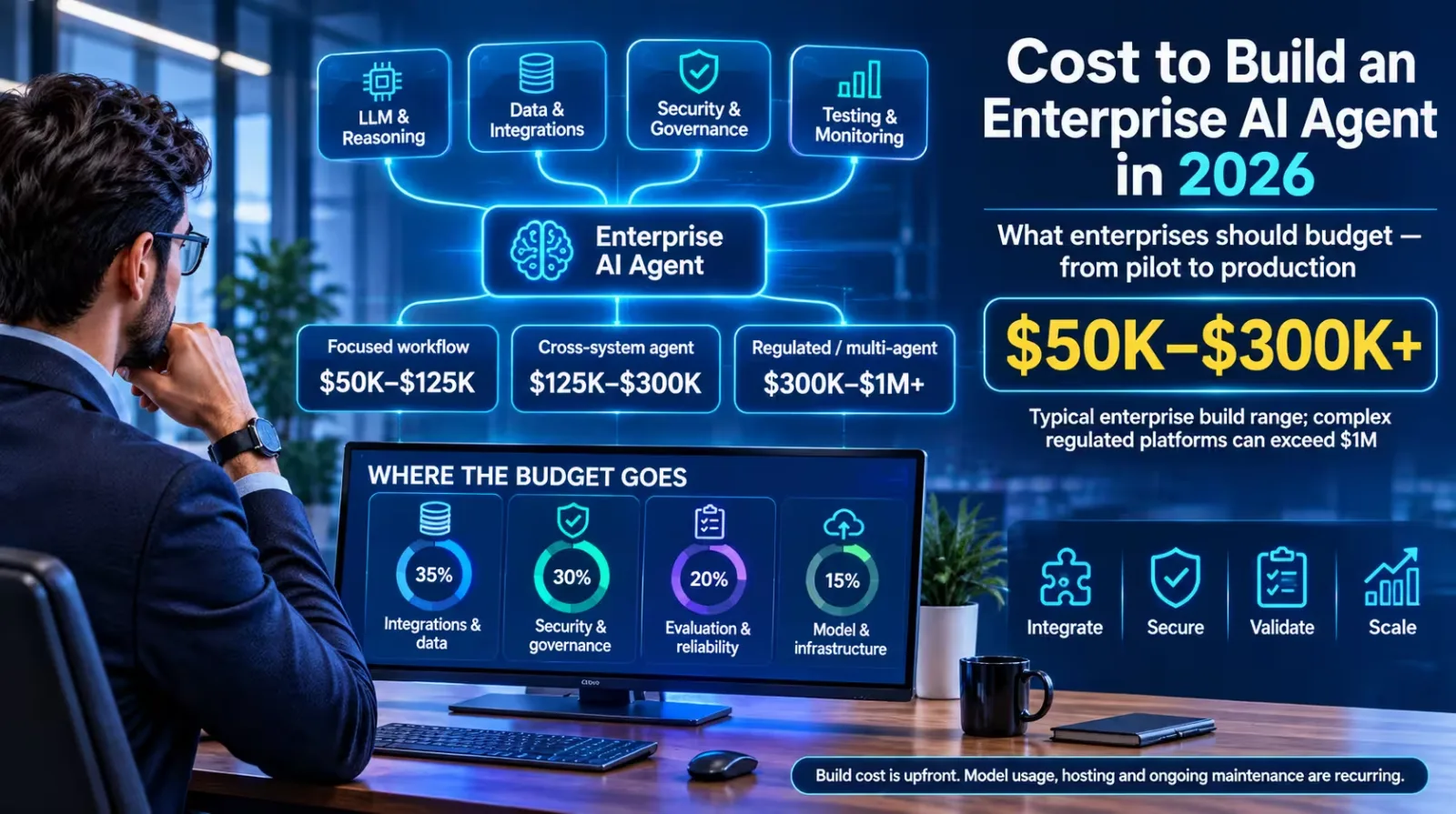
Cost to Build an Enterprise AI Agent in 2026: Pricing Breakd...
What is the real cost to build an enterprise AI agent in 2026? From MVP proof-of...
 CYBERSECURITY
Cloud Data Protection Strategies for Modern Enterprises in 2...
Learn key cloud data protection strategies to secure enterprise infrastructure,...
 Technology / Digital Marketing
The Ultimate Guide to AI Marketing Tools: How to Scale Your...
Explore the ultimate guide to top AI marketing tools, learn how to scale your te...
 DIGITAL MARKETING
AI Copy-writing Tools for Digital Marketing: How to Scale Co...
Learn how AI copy-writing tools for digital marketing help businesses scale cont...
 DIGITAL MARKETING
Why Guest Posting Is Important for SEO in 2026
Learn why guest posting is important for SEO in 2026. Build high DA back-links a...
 Technology / Digital Marketing
The Ultimate Guide to AI Marketing Tools: How to Scale Your...
Explore the ultimate guide to top AI marketing tools, learn how to scale your te...