
How to Structure a Content Calendar That Actually Drives Leads


"Discover how to build a strategic content calendar that improves SEO, attracts qualified visitors, and converts content marketing efforts into business leads."
Introduction
Creating content consistently is important for business growth, but publishing articles, social media posts, and marketing updates without a clear strategy does not always generate content calendar that drives leads meaningful results. Many businesses invest significant time in content creation but struggle to turn website visitors into qualified leads.
The problem is often not the amount of content being published. It is the lack of a structured content strategy.
A well-organized content calendar helps businesses plan relevant topics, reach the right audience, maintain publishing consistency, and guide potential customers toward taking action.
In 2026, businesses need more than a simple publishing schedule. They need a data-driven content calendar that combines SEO, audience research, customer education, and lead generation.
This guide explains how to structure a content calendar that attracts the right audience and turns content marketing into a measurable source of business opportunities.
1. Start With Clear Business and Lead Generation Goals
Before creating a content calendar, businesses should understand what they want their content marketing strategy to achieve.
Publishing content without measurable objectives makes it difficult to determine whether marketing activities are producing meaningful results.
Start by identifying your primary business goals:
Increasing qualified website traffic.
Generating more consultation requests.
Building brand awareness.
Promoting specific products or services.
Improving search engine visibility.
Attracting potential customers from international markets.
For example, a software development company targeting enterprise clients might prioritize content about AI automation, custom software development, CRM solutions, and cloud infrastructure.
Each topic should support a specific business objective rather than simply generate website visits.
2. Understand Your Target Audience
A successful content calendar begins with audience research.
Businesses need to understand who they are targeting, what problems those people experience, and what information they search for before making purchasing decisions.
Consider creating audience profiles based on:
Industry and business type.
Job roles and responsibilities.
Common operational challenges.
Purchasing interests.
Search behavior.
Business objectives.
For example, a startup founder may search for affordable software development solutions, while an enterprise technology manager may look for scalable cloud infrastructure or AI-powered business automation.
Understanding these differences helps businesses create more relevant content.
Google Search Console, customer feedback, website analytics, and keyword research tools can help identify the questions and topics your audience cares about.
3. Organize Content Around Strategic Content Pillars
Content pillars are the main subjects that define your website's expertise.
Instead of publishing unrelated articles, organize your content into a few connected categories.
For a technology company, suitable content pillars might include:
Artificial Intelligence: AI applications, machine learning, AI automation, and intelligent business systems.
Digital Marketing: SEO strategies, content marketing, lead generation, and digital advertising.
Software Development: Custom applications, web development, CRM systems, and enterprise software.
Cloud and Cybersecurity: Cloud infrastructure, data protection, enterprise security, and DevOps.
Each pillar should contain multiple related topics.
For example, under Digital Marketing, a business could publish articles about content planning, keyword research, SEO optimization, content distribution, and conversion tracking.
Businesses can also explore how AI copywriting tools for digital marketing help streamline content production and support a more consistent publishing strategy.
This approach creates opportunities for internal linking and helps readers discover additional relevant resources.
4. Map Content to the Customer Journey
One of the biggest mistakes in content marketing is creating articles without considering where readers are in their purchasing journey.
Not every visitor is ready to contact your business immediately.
A strategic content calendar should include three content stages.
Awareness Stage
At this stage, potential customers are researching problems and exploring possible solutions.
Suitable content includes:
Educational blog posts.
Industry trends.
Beginner-friendly guides.
Problem-solving articles.
Informational social media posts.
Example: How AI Automation Helps Businesses Improve Productivity.
Consideration Stage
Readers understand their problems and are comparing different solutions.
Useful content includes:
Detailed comparison articles.
Technology implementation guides.
Case studies.
Product and service explanations.
Expert recommendations.
Example: Custom Software Development vs. Ready-Made Business Software.
Decision Stage
At this stage, potential customers are closer to choosing a service provider.
Content should help them understand why your business is a suitable solution.
Examples include service landing pages, project demonstrations, consultation guides, and detailed service comparisons.
A balanced calendar should include content for all three stages rather than focusing exclusively on informational articles.
5. Build a Monthly Content Calendar
Once your goals, audience, and content pillars are defined, organize your publishing schedule.
A monthly content calendar provides a clear overview of upcoming topics, publishing dates, keywords, content formats, and conversion objectives.
A practical calendar should include:
| Content Element | Purpose |
|---|---|
| Publishing Date | Maintain consistency |
| Article Topic | Define the subject |
| Primary Keyword | Target search intent |
| Secondary Keywords | Cover related searches |
| Content Category | Organize content pillars |
| Target Audience | Identify intended readers |
| Internal Links | Connect relevant pages |
| CTA | Encourage lead generation |
| Performance Metrics | Measure results |
For example, a technology business could publish two detailed educational articles each week, supported by social media posts and email newsletters.
The important thing is to choose a realistic publishing frequency that allows sufficient time for research, writing, editing, and promotion.
6. Use SEO Research to Select Topics
Search engine optimization should be part of content planning from the beginning.
Before adding a topic to your calendar, research whether people are searching for it and understand what type of information they expect to find.
Focus on:
Relevant primary keywords.
Related secondary keywords.
Long-tail search queries.
Search intent.
Competitor content gaps.
Questions asked by potential customers.
For example, someone searching for content calendar templates may be looking for a practical planning resource, while someone searching for content marketing strategies to generate leads may be closer to exploring professional marketing services.
Understanding search intent helps businesses create more relevant content.
It is also important to avoid publishing multiple articles targeting exactly the same search intent.
Businesses can further improve their strategy by exploring AI SEO automation techniques, which can support keyword research, content optimization, and more efficient SEO workflows.
7. Connect Every Article to a Relevant Conversion Goal
Traffic is valuable, but attracting visitors is only one part of successful content marketing.
Businesses also need to give readers a clear next step.
Every important article should include a relevant call to action (CTA).
Examples include:
Request a Free Consultation.
Explore Our Services.
Contact Our Development Team.
Schedule a Strategy Discussion.
Discover Our AI Solutions.
The CTA should match the subject of the article.
For example, an article about CRM development could direct readers toward CRM services, while an article about content marketing could encourage them to explore digital marketing solutions.
Businesses looking for professional technology solutions can explore Renvyxa Technologies' services to learn more about AI solutions, CRM development, and custom software development.
Avoid placing aggressive sales messages throughout educational articles. Instead, provide useful information first and introduce relevant services naturally.
8. Repurpose Content Across Multiple Channels
A content calendar should not end when an article is published.
One well-researched article can support several marketing activities.
For example, a comprehensive blog post can be transformed into:
LinkedIn educational posts.
Facebook updates.
Short-form video scripts.
Email newsletter content.
Instagram carousel posts.
Industry discussion topics.
Downloadable resources.
Repurposing helps businesses reach audiences who prefer different platforms and formats.
It also improves the value of existing research without requiring an entirely new article for every marketing channel.
AI-powered content creation tools can help generate content variations, organize campaign ideas, and accelerate repetitive marketing tasks. However, human review remains essential to maintain accuracy, originality, and brand consistency.
9. Measure Performance and Improve Your Calendar
A content calendar should be reviewed regularly.
Publishing an article does not guarantee that it will rank in search results or generate leads. Businesses need to monitor performance and identify opportunities for improvement.
Important metrics include:
Organic Traffic: How many visitors arrive through search engines?
Search Impressions: How frequently do your pages appear in search results?
Click-Through Rate: How often do people click your search listings?
Keyword Rankings: Which search queries are bringing visibility?
Engagement: Are visitors exploring additional pages?
Conversion Rate: How many visitors complete meaningful actions?
Qualified Leads: How many inquiries come from relevant potential customers?
Google Analytics 4 and Google Search Console can help businesses understand website performance.
If an article receives impressions but few clicks, its title and meta description may need improvement.
If it attracts visitors but generates no inquiries, review the content's search intent, relevance, and calls to action.
Continuous improvement is what turns a basic publishing schedule into a long-term marketing asset.
10. Make Content Planning a Continuous Business Process
Successful content marketing requires coordination between research, production, publishing, distribution, and performance analysis.
Businesses should review their content calendar every month to identify new opportunities and update existing material.
Consider these practices:
Review keyword performance regularly.
Update outdated information.
Identify missing topics within existing content pillars.
Improve internal linking.
Monitor competitor content.
Add original insights and practical examples.
Adjust publishing priorities based on performance.
Technology can also make this process more efficient.
Businesses can use AI-powered systems, marketing automation, and customized software workflows to organize content production, track campaign progress, and manage customer inquiries.
The objective is not simply to publish more content. It is to create a repeatable system that connects useful information with measurable business outcomes.
Conclusion
A content calendar that actually drives leads requires more than a list of article titles and publishing dates. It needs a clear business strategy, audience research, SEO planning, customer journey mapping, relevant internal linking, and measurable conversion goals.
By organizing content around strategic pillars and consistently evaluating performance, businesses can build a stronger online presence and attract audiences who are genuinely interested in their services.
At Renvyxa Technologies, we believe that effective digital growth comes from combining intelligent technology, strategic planning, and measurable execution.
Whether your business needs AI solutions, custom software development, CRM systems, or digital marketing support, the right technology and strategy can help create sustainable opportunities for growth.
Ready to build a smarter digital growth strategy?
Visit Renvyxa Technologies to explore professional technology solutions and discover how intelligent digital systems can support your business objectives.
 Machine Learning
 for Businesses: Trends in 2027
Discover how machine learning is transforming modern businesses in 2027 through...
 AI & Innovation
Top Open Source AI Tools You Should Try in 2026
Discover the top open source AI tools of 2026. Explore powerful, privacy-focused...
 ARTIFICIAL INTELLIGENCE
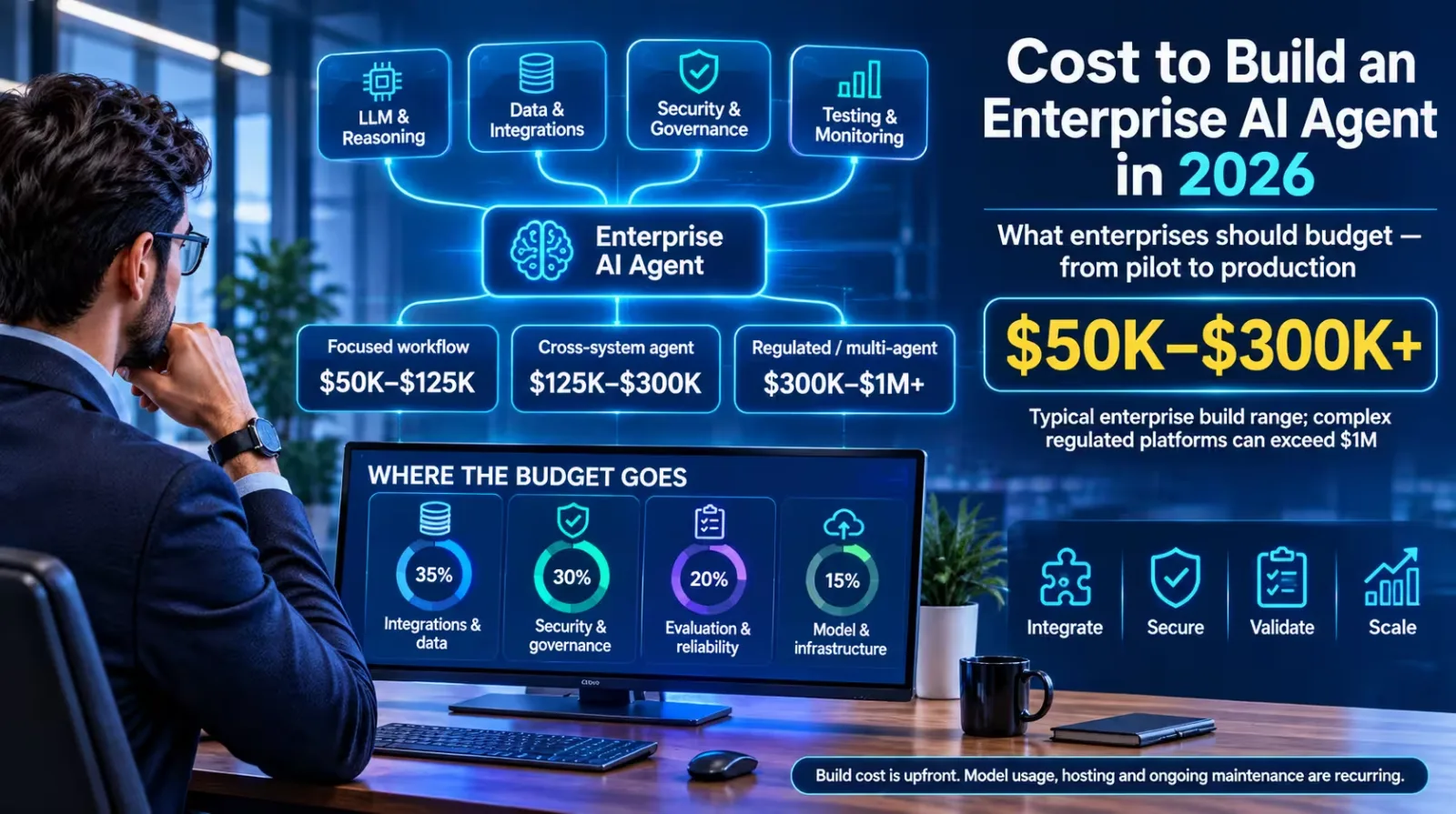
Cost to Build an Enterprise AI Agent in 2026: Pricing Breakd...
What is the real cost to build an enterprise AI agent in 2026? From MVP proof-of...
 CYBERSECURITY
Cloud Data Protection Strategies for Modern Enterprises in 2...
Learn key cloud data protection strategies to secure enterprise infrastructure,...
 Technology / Digital Marketing
The Ultimate Guide to AI Marketing Tools: How to Scale Your...
Explore the ultimate guide to top AI marketing tools, learn how to scale your te...
 DIGITAL MARKETING
AI Copy-writing Tools for Digital Marketing: How to Scale Co...
Learn how AI copy-writing tools for digital marketing help businesses scale cont...
 DIGITAL MARKETING
Why Guest Posting Is Important for SEO in 2026
Learn why guest posting is important for SEO in 2026. Build high DA back-links a...