
Custom CRM Development in 2027: Features, Benefits, and Business Growth


"Discover how custom CRM development in 2027 helps businesses improve customer relationships, automate workflows, integrate artificial intelligence, and build scalable software solutions for long-term business growth."
Introduction
Customer relationships play an important role in the success of every modern business. As companies grow, managing customer information, tracking sales activities, responding to inquiries, and maintaining communication across multiple channels can become increasingly difficult. Traditional spreadsheets and basic customer management tools may no longer provide the flexibility businesses need.
This is where custom CRM development becomes valuable. A Custom Customer Relationship Management (CRM) system allows businesses to manage customer interactions, organize sales processes, automate repetitive tasks, and improve operational efficiency through software designed around their specific requirements.
In 2027, businesses are increasingly interested in intelligent CRM platforms that combine artificial intelligence, automation, data analytics, and cloud-based technology. Instead of adjusting their operations to fit generic software, organizations can invest in CRM solutions that support their workflows, business goals, and long-term growth.
What Is Custom CRM Development?
Custom CRM development is the process of designing and building customer relationship management software according to the unique requirements of a business.
Unlike ready-made CRM platforms, custom CRM software can be developed around specific business processes. Companies can choose the features, integrations, dashboards, automation rules, and reporting tools that best support their operations.
According to Salesforce's CRM guide, CRM technology helps businesses manage interactions with customers and prospects, streamline processes, and improve customer relationships.
For example, a software development company may need lead management, project tracking, and client communication features. An e-commerce business may require customer purchase histories, marketing automation, and order management integrations.
A custom CRM system brings these activities together in one centralized platform.
Why Businesses Need Custom CRM Software in 2027
Customer expectations continue to evolve. People expect faster responses, relevant communication, and consistent service across different channels. Businesses that struggle to organize customer information may miss sales opportunities and experience operational delays.
Custom CRM software helps address these challenges through centralized customer data and streamlined workflows.
1. Centralized Customer Information
Customer information is often spread across emails, spreadsheets, messaging applications, and different business platforms. Managing these separate sources can create confusion and make it difficult for employees to access accurate information.
A custom CRM system brings customer records, communication history, sales activities, and important business information into one centralized location.
Employees can access relevant information more efficiently, understand previous customer interactions, and provide more consistent support.
2. Improved Sales Management
Sales teams need clear visibility into leads, opportunities, follow-ups, and ongoing negotiations.
Custom CRM software can provide a structured sales pipeline that helps employees track each opportunity from initial contact to final conversion.
Businesses can configure different sales stages, assign leads to team members, create follow-up reminders, and monitor sales performance.
For additional information about CRM sales management and implementation, businesses can explore Microsoft Dynamics 365 Sales documentation.
3. Better Customer Experience
A positive customer experience depends on understanding customer needs and responding effectively.
With a centralized CRM platform, employees can review customer history, identify previous concerns, and provide more relevant assistance.
Businesses can also use customer information to organize personalized communication, improve follow-up processes, and strengthen long-term relationships.
4. Reduced Manual Work
Many business activities involve repetitive administrative tasks, including data entry, assigning leads, sending reminders, and updating records.
Custom CRM development makes it possible to automate these processes through predefined workflows.
For example, when a potential customer submits an inquiry, the system can automatically create a lead record, assign it to a sales representative, and schedule a follow-up notification.
Automation reduces unnecessary manual work and allows employees to focus on more valuable business activities.
Essential Features of Modern CRM Software
A successful CRM platform should support the actual requirements of its users. Although features differ between industries, several capabilities are particularly valuable for modern businesses.
Lead and Contact Management
Lead management helps organizations collect, organize, and track potential customers. Employees can store contact details, communication history, lead sources, and follow-up activities.
Contact management also makes it easier to maintain accurate customer records throughout the sales process.
Sales Pipeline Management
A sales pipeline provides a visual overview of opportunities at different stages.
Businesses can monitor new leads, ongoing discussions, proposals, negotiations, and completed sales. This visibility helps sales managers understand progress and identify potential bottlenecks.
Workflow Automation
Workflow automation allows businesses to establish rules for repetitive activities.
Examples include automatic lead assignment, follow-up reminders, customer notifications, and task creation.
These features help standardize business processes and reduce delays.
Reporting and Analytics
CRM reporting provides useful information about sales performance, customer acquisition, lead conversion, and team productivity.
Custom dashboards allow managers to monitor relevant business indicators and make informed decisions using organized data.
Third-Party Integrations
Modern businesses use different applications for communication, marketing, accounting, customer support, and project management.
A custom CRM can integrate with relevant third-party platforms through APIs, allowing information to move between systems and reducing disconnected workflows.
Platforms such as HubSpot CRM demonstrate how contact management, sales pipelines, reporting, and business integrations can work together in a centralized environment.
Role-Based Access and Security
Businesses often need different access levels for administrators, managers, sales representatives, and support employees.
Role-based permissions help control access to sensitive information and ensure that employees can use the features relevant to their responsibilities.
How Artificial Intelligence Is Transforming CRM Development
Artificial intelligence is becoming an important component of modern CRM platforms. AI-powered capabilities can help businesses understand customer information, automate activities, and improve decision-making.
Some valuable applications include:
AI-Powered Lead Scoring: Machine learning models can analyze available lead information and historical sales patterns to help identify promising opportunities.
Predictive Sales Analytics: AI-based analytics can examine historical data and identify patterns that may help businesses forecast sales trends and understand pipeline performance.
Intelligent Customer Support: AI-powered chatbots and virtual assistants can answer common questions, provide basic assistance, and direct complex inquiries to the appropriate employees.
Automated Data Analysis: AI tools can help identify customer behavior patterns, organize information, and generate useful insights from business data.
Personalized Customer Communication: AI can assist businesses in preparing relevant communication based on customer interests, previous interactions, and available CRM information.
However, AI should support human decision-making rather than replace it entirely. Businesses must also consider data quality, privacy, security, and transparency when implementing AI-powered CRM features.
Custom CRM vs. Ready-Made CRM Software
Businesses generally choose between purchasing an existing CRM platform and developing a custom solution.
Both approaches offer advantages, depending on organizational requirements.
Ready-made CRM software is often suitable for companies that need standard customer management features and want to get started quickly.
Custom CRM development may be more appropriate for organizations with specialized workflows, complex integrations, industry-specific requirements, or greater control over software functionality.
The main differences include:
Flexibility: Custom CRM software allows businesses to define features according to their requirements, while ready-made platforms generally offer predefined functionality.
Integration: Custom development can support specific integrations with existing business applications and internal systems.
Scalability: A custom platform can be expanded as business requirements change, provided that its architecture is designed to support future growth.
Ownership and Control: Custom development can provide greater control over software functionality, development priorities, and future enhancements.
Initial Investment: Ready-made platforms may have lower initial implementation costs, while custom development generally requires a larger upfront investment.
The right option depends on budget, business complexity, technical requirements, and long-term objectives.
Cloud-Based CRM and Business Scalability
Cloud technology has made CRM systems more accessible to businesses of different sizes.
Cloud-based CRM platforms allow authorized employees to access customer information from different locations through secure internet connections.
This can be particularly useful for organizations with remote employees, distributed sales teams, and multiple office locations.
Cloud-based solutions can also support flexible infrastructure, centralized updates, and integration with other cloud applications.
However, businesses should carefully evaluate hosting infrastructure, access controls, data backup procedures, encryption, and disaster recovery arrangements before deploying a cloud CRM platform.
Organizations can explore AWS Security and Data Protection to understand different approaches to protecting cloud workloads and business information.
A properly designed cloud-based CRM can support business expansion without requiring organizations to maintain all infrastructure locally.
Steps Involved in Custom CRM Development
Developing a reliable CRM platform requires proper planning, technical expertise, and continuous improvement.
The following steps provide a general development approach.
Step 1: Identify Business Requirements
The first step is understanding how a business manages customers, sales, communication, and internal operations.
Development teams should identify existing challenges, required features, user roles, and integration needs.
Step 2: Plan the CRM Architecture
The system architecture determines how different components work together.
Developers must consider database structure, application functionality, security requirements, integrations, and scalability.
Step 3: Design the User Interface
An effective CRM interface should be simple, organized, and easy to navigate.
Dashboards, customer profiles, sales pipelines, and reporting screens should be designed around the needs of actual users.
Step 4: Develop Core Features
The development process involves building essential modules such as contact management, lead tracking, sales pipelines, reporting, and workflow automation.
Additional functionality can be introduced according to business requirements.
Step 5: Integrate and Test the System
CRM platforms often need to connect with existing business applications.
Developers should test integrations, user permissions, performance, security, and application functionality before deployment.
Step 6: Deployment and Ongoing Maintenance
After testing, the CRM platform can be deployed for business use.
Regular maintenance, security updates, performance monitoring, and feature improvements help keep the system reliable as business requirements evolve.
How to Choose the Right CRM Development Partner
Selecting an experienced development partner is an important part of a successful CRM project.
Businesses should evaluate technical capabilities, development experience, communication processes, and the ability to understand specific operational requirements.
Important considerations include:
Experience in custom software and CRM development.
Knowledge of API integrations and cloud technologies.
Understanding of database architecture and application security.
Ability to develop scalable and maintainable software.
Clear project planning and communication.
Ongoing technical support and maintenance.
A suitable development partner should focus on business outcomes rather than simply delivering a collection of software features.
Businesses exploring professional technology services can also visit Renvyxa Technologies to learn more about modern software development and AI solutions.
Future Trends in CRM Development
CRM technology will continue evolving as businesses adopt more intelligent and connected software solutions.
Several developments are likely to influence CRM platforms in 2027 and beyond.
AI-Driven Automation: More CRM platforms will incorporate intelligent automation to support lead management, customer communication, and business workflows.
Advanced Customer Analytics: Businesses will increasingly use data analytics to understand customer behavior and identify opportunities for improving customer relationships.
Omnichannel Communication: Organizations will seek more connected ways to manage customer interactions across email, websites, messaging platforms, and other communication channels.
Low-Code Customization: Low-code tools may make certain CRM customizations faster and more accessible, although complex business requirements will still require professional development.
Stronger Data Protection: As CRM systems store valuable customer information, organizations will continue prioritizing access controls, encryption, compliance, and secure infrastructure.
These developments highlight the importance of building CRM systems that can adapt to changing business and technology requirements.
Conclusion
Custom CRM development offers businesses an opportunity to improve customer management, streamline sales operations, automate repetitive tasks, and build more organized workflows.
In 2027, the combination of artificial intelligence, cloud technology, business automation, and advanced analytics is creating new possibilities for modern CRM platforms.
Rather than relying on software that may not fully match their operations, businesses can invest in solutions designed around their specific goals and future requirements.
Choosing the right technology and development partner is essential for building a secure, scalable, and effective CRM platform.
Renvyxa Technologies focuses on AI and software development solutions that help businesses explore modern technology and improve their digital operations. Organizations looking to develop custom CRM platforms, integrate intelligent automation, or build scalable business applications can explore Renvyxa Technologies' services.
Ready to improve your business operations with custom software? Contact Renvyxa Technologies to explore how modern AI and software development solutions can support your business growth.
 Machine Learning
 for Businesses: Trends in 2027
Discover how machine learning is transforming modern businesses in 2027 through...
 AI & Innovation
Top Open Source AI Tools You Should Try in 2026
Discover the top open source AI tools of 2026. Explore powerful, privacy-focused...
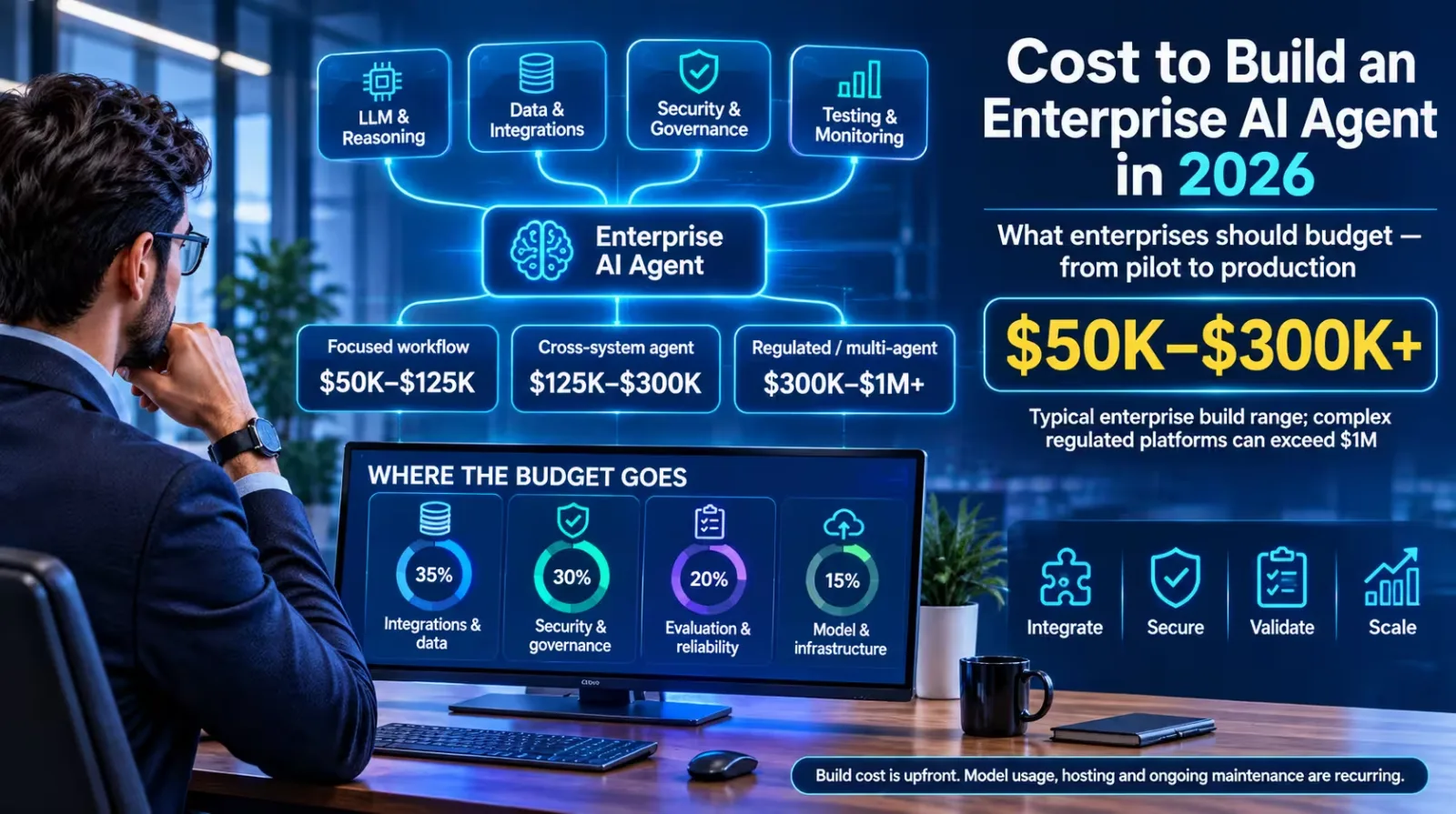 ARTIFICIAL INTELLIGENCE
Cost to Build an Enterprise AI Agent in 2026: Pricing Breakd...
What is the real cost to build an enterprise AI agent in 2026? From MVP proof-of...
 CYBERSECURITY
Cloud Data Protection Strategies for Modern Enterprises in 2...
Learn key cloud data protection strategies to secure enterprise infrastructure,...
 Technology / Digital Marketing
The Ultimate Guide to AI Marketing Tools: How to Scale Your...
Explore the ultimate guide to top AI marketing tools, learn how to scale your te...
 DIGITAL MARKETING
AI Copy-writing Tools for Digital Marketing: How to Scale Co...
Learn how AI copy-writing tools for digital marketing help businesses scale cont...
 DIGITAL MARKETING
Why Guest Posting Is Important for SEO in 2026
Learn why guest posting is important for SEO in 2026. Build high DA back-links a...